The Unseen Hyrule: My Journey Through Tears of the Kingdom's Cut Content
As I've spent countless hours exploring every corner of Hyrule in The Legend of Zelda: Tears of the Kingdom, I've often wondered about the paths not taken. Recently, diving into the game's files and comparing early trailers with the final release has revealed a parallel universe of possibilities—a Hyrule that could have been. It's 2026, and with Nintendo confirming no DLC for TOTK, these glimpses into the development process feel like discovering ancient ruins of a different timeline. What I've uncovered tells a story of evolution, compromise, and fascinating 'what ifs' that would have fundamentally changed my adventure.
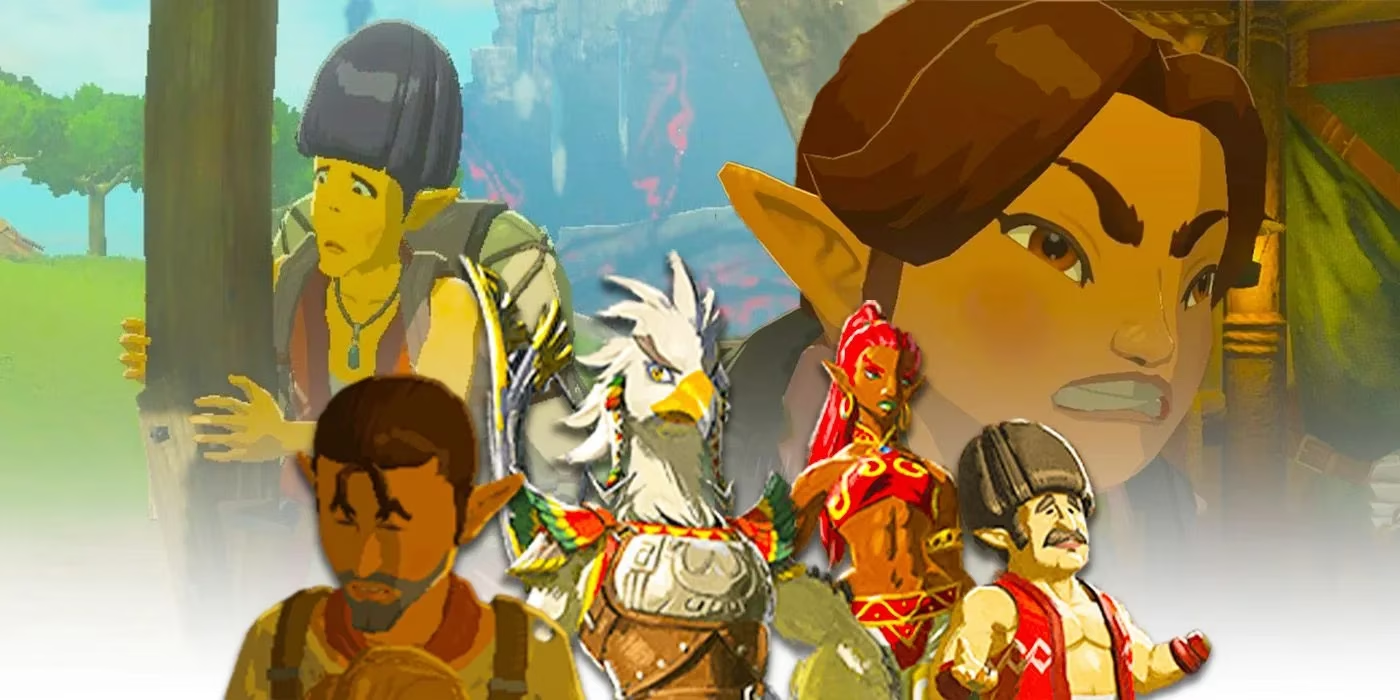
Let me start with something that would have revolutionized shrine navigation: the Twice Jump cooking effect. I can't count how many times I've stared at a shrine chest just out of reach, knowing a slightly higher jump would solve everything. Finding this unused effect in the game files felt like discovering a secret recipe. Would it have doubled my jump height? Allowed a mid-air second jump? Either implementation would have created incredible sequence-breaking opportunities, letting me reach areas the developers might have wanted to keep gated. No wonder they cut it—some puzzles would have become trivial! Still, imagining myself cooking up some jump-boosting meals and bounding across Hyrule with enhanced mobility... it's a tantalizing thought.
Then there's Emergency Avoid, another phantom cooking effect that sounds like it was designed for players like me who occasionally misjudge a Lynel's attack range. The name alone suggests a last-second survival mechanism—perhaps reducing fatal damage to survivable levels or even granting brief invincibility. In my toughest boss fights against Phantom Ganon or in the Depths, this could have been a game-changer. While I understand balancing concerns (it might have made combat too forgiving), there were definitely moments when I wished for just such a defensive option.
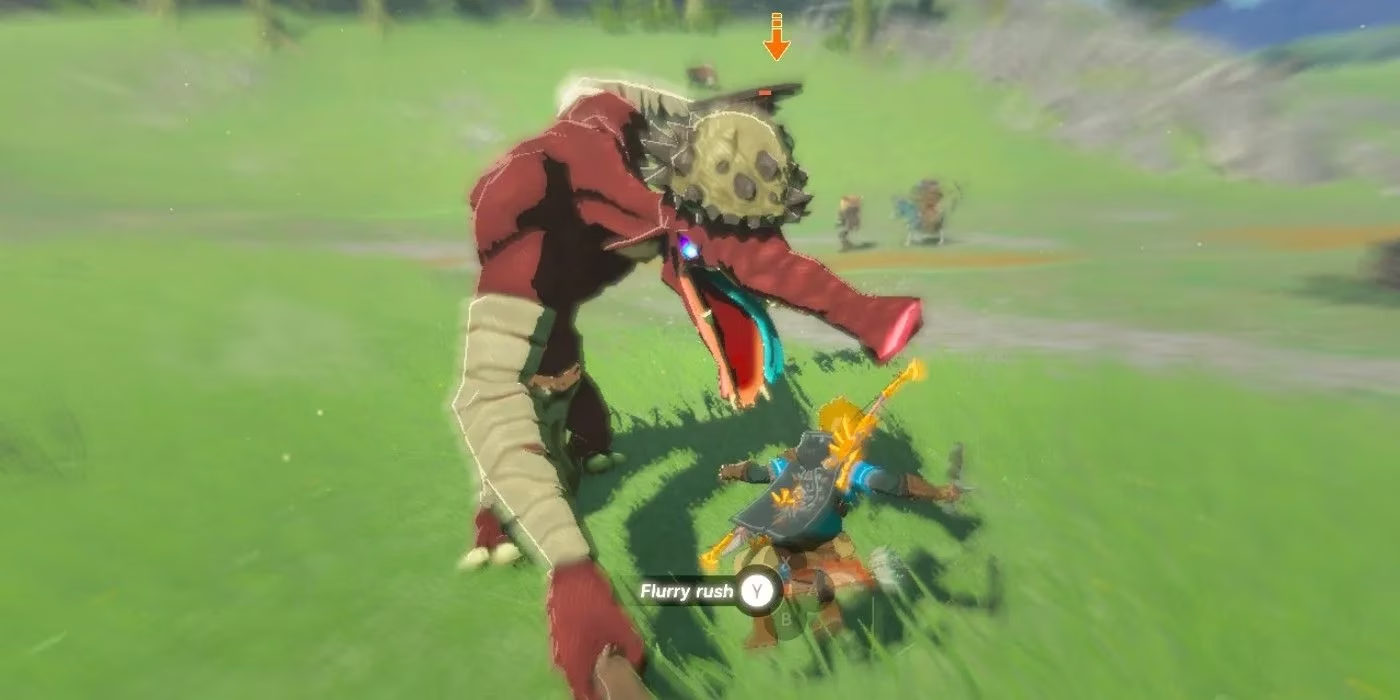
The story's opening could have been dramatically different. Early trailers show Link receiving Rauru's arm beneath Hyrule Castle without losing his original arm to Gloom—a subtle but significant narrative shift. In that version, he even catches Zelda as she falls! This suggests the developers might have initially envisioned a less traumatic beginning, perhaps preserving Link's original body while still granting him new abilities. The current version establishes higher stakes immediately, but I'm fascinated by how this alternate opening would have changed the emotional tone of those early hours.
My exploration with Zelda at the beginning felt brief—too brief, honestly. Those early trailers hint at extended investigation scenes where we explored more ruins together in different outfits. I would have loved more time seeing Hyrule through Zelda's eyes after her century-long absence. What other ancient sites did she want to examine? Which post-Calamity changes fascinated her most? Instead, we rush beneath the castle, and that precious character-building time gets compressed. These cut scenes suggest a more gradual introduction to our adventure, one that would have made the subsequent separation more poignant.
Dungeon design saw significant revisions too. The Wind Temple originally required only Level 1 Cold Resistance instead of Level 2. As someone who often visits this temple early, I frequently forgot to reapply cold-resistant elixirs while solving puzzles, leading to frustrating health drains. The lower requirement would have been more forgiving for new players. Similarly, the Fire Temple's lower levels were originally much darker—possibly requiring torch navigation or light-based puzzles. This could have added atmospheric challenge, especially since early versions apparently lacked the Scorching Climate effect. Maybe solving lighting puzzles would have gradually increased the temperature, tying mechanics to narrative!
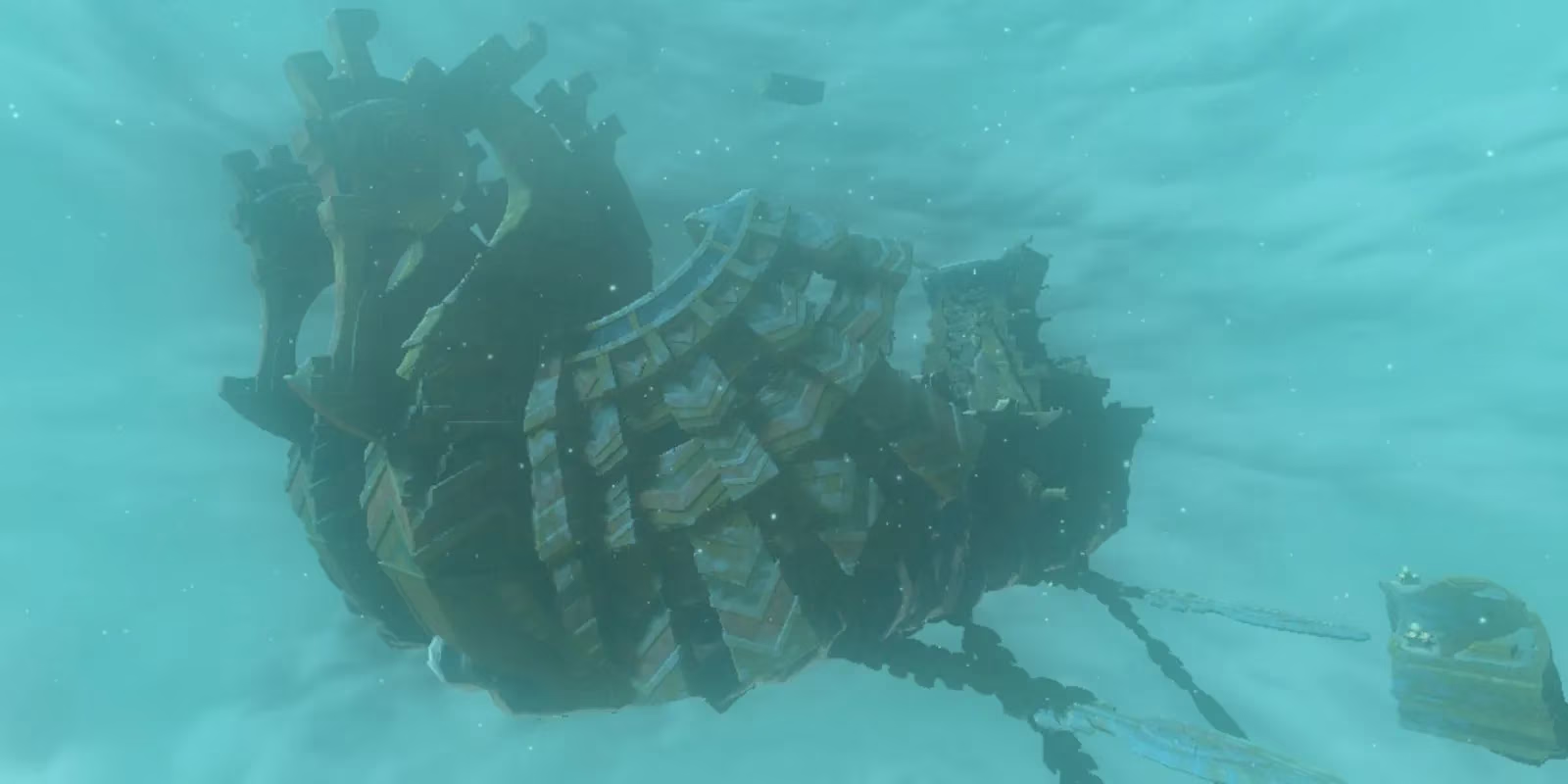
Throughout Hyrule, I've sensed invisible boundaries—areas that feel like they should be accessible but aren't. Data mining confirms this: fully modeled but inaccessible rooms exist atop Hyrule Castle and near Gerudo Town. In BOTW, similar rooms teased us, and in TOTK, they return as architectural ghosts. Imagine if these contained powerful weapons or rare Fuse materials, rewarding clever traversal instead of glitches! The castle peak room particularly feels like missed potential for a late-game challenge.
Perhaps the most intriguing file discovery is Rauru's arm existing as equippable armor rather than a biological replacement. This aligns with the trailer's different opening and suggests Link might have initially acquired abilities through wearable technology rather than physical transformation. Was there a version where he could remove the arm? Switch between Zonai and Hylian capabilities? This single file hints at entire alternative mechanics we'll never experience.
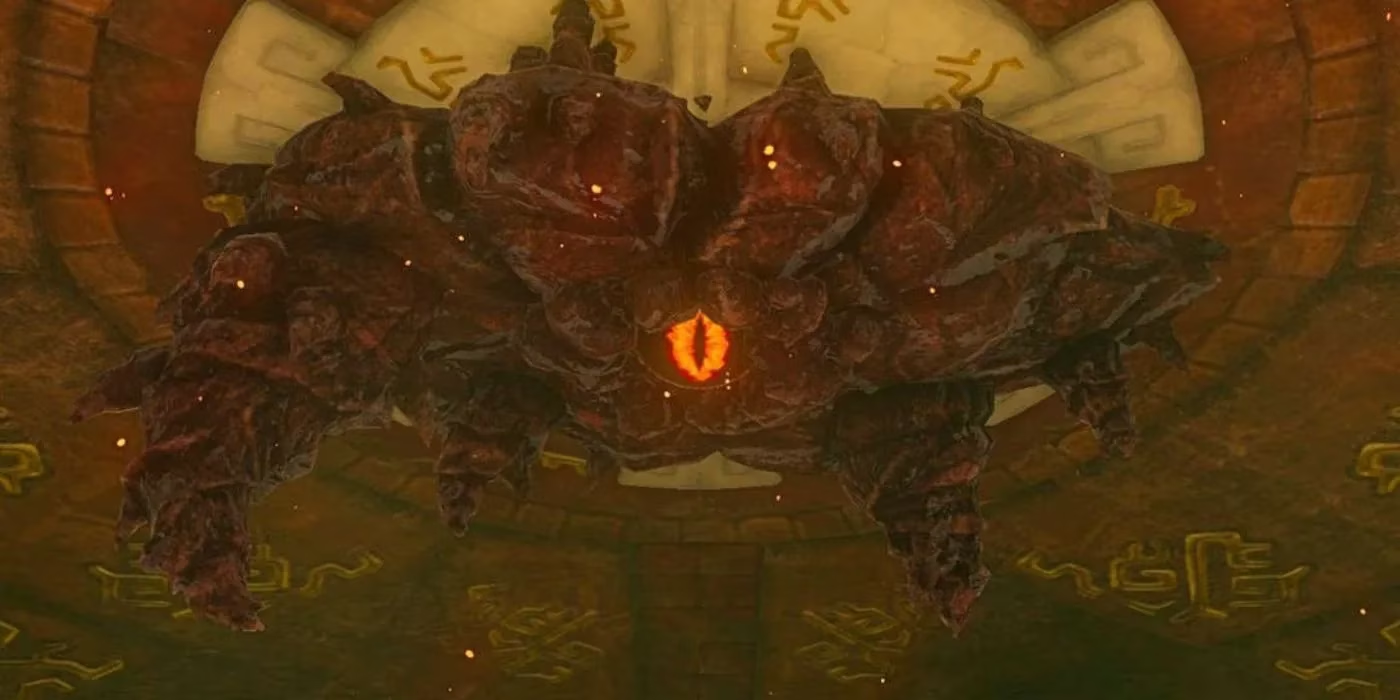
The Master Sword has its own secrets. Multiple unused versions exist in the files, including the intact sword from the opening sequence—obtainable through glitches but unfusable. This suggests early gameplay might have featured combat before the sword's corruption, or perhaps alternative repair methods. Fighting with a gradually degrading blade before restoring it could have created interesting tension.
But the biggest revelation—and my personal disappointment—concerns the Spirit Temple. Originally, it wasn't just a boss arena but a full dungeon with obstacle courses and construct enemies. Mineru, the sage of spirit, would have designed challenges testing agility and creativity over millennia. Instead, we got a straightforward boss fight. Compared to other temples' intricate puzzles, the Spirit Temple feels incomplete. I would have loved navigating Mineru's ancient mechanical trials!
Here's what could have been different in TOTK's development:
| Feature | Original Concept | Final Version | Impact on Gameplay |
|---|---|---|---|
| Opening Sequence | Link gains arm without losing his own | Link's arm corrupted by Gloom | Less traumatic start, different narrative stakes |
| Wind Temple | Level 1 Cold Resistance required | Level 2 Cold Resistance required | More forgiving for early-game players |
| Spirit Temple | Full obstacle-course dungeon | Boss arena only | Reduced dungeon content, simpler challenge |
| Cooking Effects | Included Twice Jump & Emergency Avoid | Effects removed | Less sequence-breaking, more balanced combat |
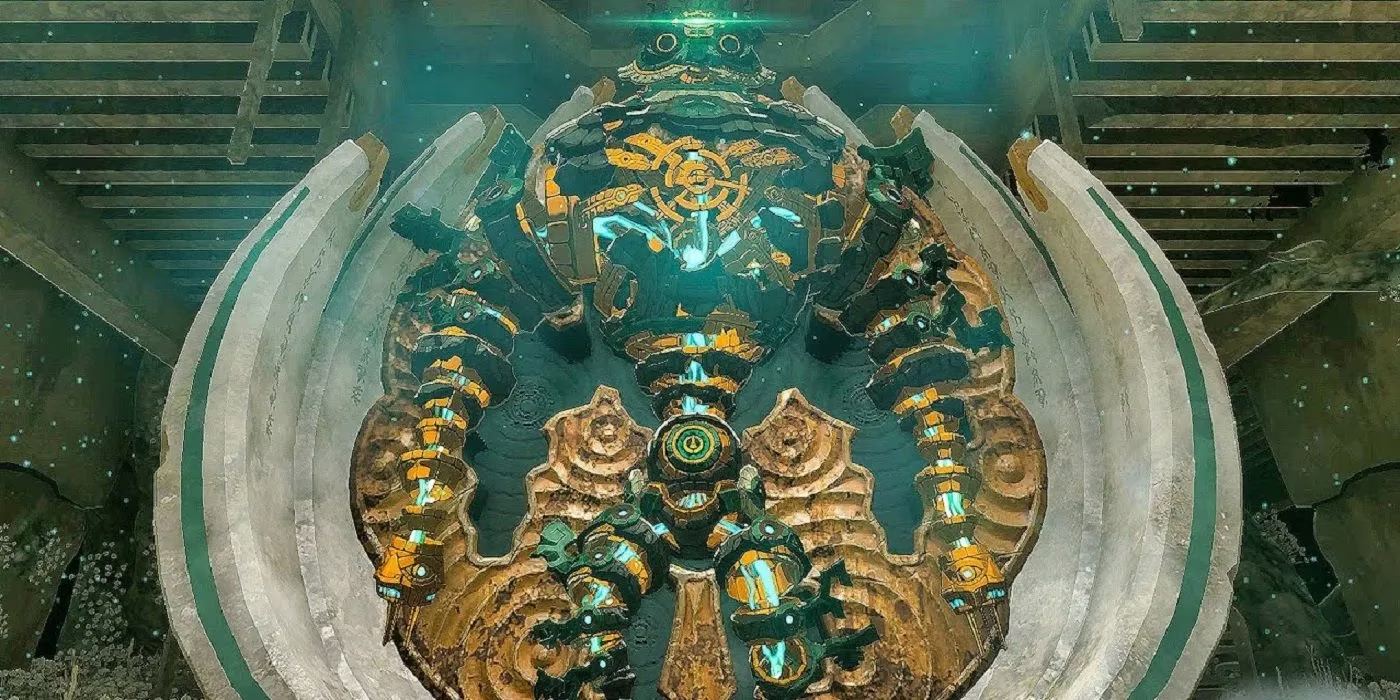
Reflecting on these discoveries, I realize game development is a series of choices—each cut element representing a different possible experience. The TOTK we got is magnificent, but the shadow version haunts my imagination. What if I could double-jump across canyons? What if the Spirit Temple had complex platforming challenges? What if Link and Zelda's opening exploration lasted hours instead of minutes?
These unused elements aren't just discarded code; they're artifacts of creative decisions that shaped the Hyrule I know. While I'll never play that alternate version, knowing it existed enriches my appreciation for the final product. Every game contains multitudes—the one released, and the many that could have been. In TOTK's case, those parallel developments whisper tantalizing secrets about the adventure that almost was.
As I continue my adventures in 2026, I sometimes pause at familiar locations and imagine how they might have differed. That shrine puzzle that took me thirty minutes? A Twice Jump meal might have solved it in seconds. That narrow escape from a boss? Emergency Avoid could have made it deliberate strategy rather than lucky timing. These ghosts of development past remind me that even the most polished worlds have unseen layers, waiting to be discovered by curious explorers willing to look beyond what's presented. Hyrule feels alive not just because of what's there, but because of what almost was—and that makes every discovery, every solved puzzle, and every victory feel like part of a larger, more mysterious story.
Expert commentary is drawn from Game Developer (formerly Gamasutra), where postmortems and production insights often illustrate why “cut content” like unused cooking effects or an expanded Spirit Temple can disappear late in development—typically due to balance risks, pacing concerns, or the need to lock scope for polish—helping frame TOTK’s datamined remnants as normal artifacts of iterative design rather than abandoned promises.