The Silent Hero Debate: Zelda's Live-Action Dilemma
The year is 2026, and the internet’s collective jaw still hasn’t quite relocated itself after Nintendo dropped the bombshell that a live-action The Legend of Zelda movie is on the way, with none other than Sony Pictures co-producing the adventure. The initial shock has mellowed into a deliciously chaotic swirl of fan theories, casting rumors, and the kind of feverish speculation that produces both brilliantly unhinged Reddit threads and the occasional very serious video essay. Yet, one question looms over every other, a spectral Cucco ready to peck apart the film’s potential: will Link speak?
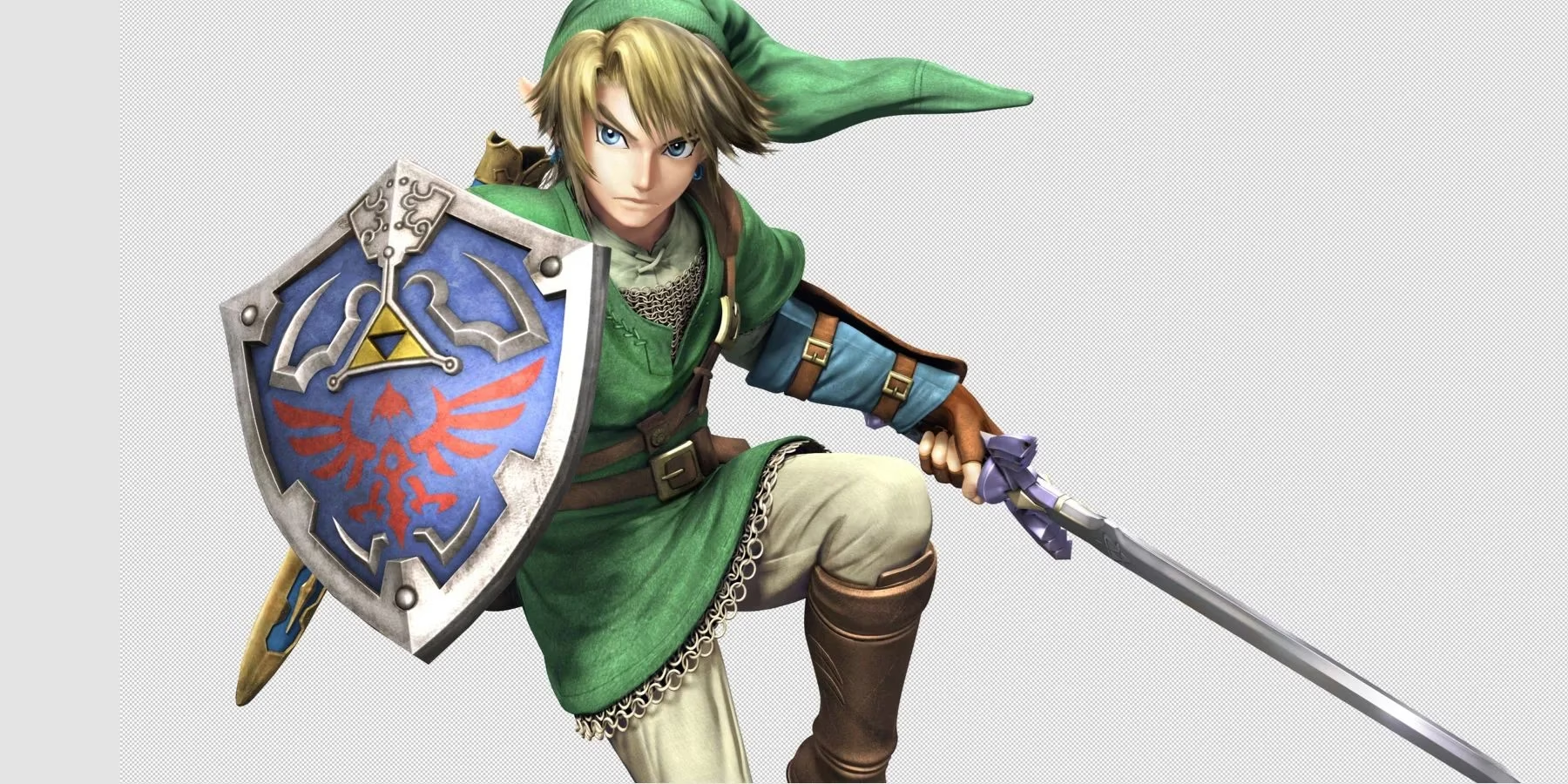
For anyone who has ever wielded the Master Sword, the notion of a chatty Link feels fundamentally wrong, like adding a laugh track to a Ghibli film or teaching a Korok to scream. Link’s silence is not a bug; it is the very operating system of his heroism. Across decades of gaming, he has rescued princesses, tamed divine beasts, and broken millions of clay pots without uttering a single complete sentence. He is the blueprint for the silent protagonist, a vessel into which players pour their own courage, frustration, and occasional mad impulse to roll into every wall. Translating that sacred quiet to a medium built on dialogue is a tightrope walk across Death Mountain without a fairy in a bottle.
The live-action Zelda movie finds itself in a peculiar bind, one immortalized by fan debates that rage hotter than Din’s Fire. On one hand, a story without a speaking lead is a screenwriting puzzle that even the Goddess Hylia might find daunting. How does a director convey complex motivation, romantic tension with Zelda, or exposition about the Triforce when the central figure communicates exclusively through grunts, yelps, and the occasional
“HIYAAH!”? This year’s Super Mario Bros. Movie already tested the waters by letting Mario chatter away beyond his trademark catchphrases, and while it worked for the mustachioed plumber, Link is a different beast entirely. Mario is a character built on exuberance and expression; Link is carved from stoicism and mystery. Giving him dialogue would be a seismic shift, akin to revealing that Samus Aran secretly loves stand-up comedy.
Yet history shows that a voiceless protagonist can thrive on the silver screen. The 2026 production team could steal wisdom from modern classics: think of the brutal eloquence of the driver in Drive, or the heart-wrenching sign-language conversations in A Quiet Place. Even animated fare like WALL-E proved that a character can convey galaxies of emotion through beeps and body language. Imagine Link navigating Hyrule’s political intrigue with nothing but his trusty Sheikah Slate and a repertoire of exaggerated nods, pointed stares, and the occasional devastatingly sincere thumbs-up. The comedic potential is staggering. Picture a scene where a verbose Goron elder delivers a ten-minute monologue about the history of the Hero of Time, only for Link to respond by simply holding up a bomb flower with a tilted head. The audience would roar—and they would still understand him perfectly.
Of course, the risk of alienating moviegoers who have never touched a Zelda game is real. A silent protagonist in a $200 million blockbuster would require a writer’s room composed of poets and madmen, a cast capable of acting around a mute center, and a director who treats silence not as a void but as a canvas. If the filmmakers choose to give Link a voice, the solution is not to flood the screen with words but to ration them like precious Heart Containers. A few words, spoken in a moment of ultimate crisis, could land with the force of a Lynel crusher. Conversely, a Link who prattles on about his feelings would likely see the theater erupt in a chorus of
“Excuse me, Princess?”-level mockery.
As of 2026, casting rumors continue to swirl like leaves in a Korok Forest. Devout fans remain split, some demanding tradition, others begging for a bold reinterpretation. The safest bet for Nintendo and Sony may be the bravest one: craft a film where Link’s silence is not a limitation but the emotional core. Let him communicate through his actions, his scars, and the sheer, unyielding determination in his eyes as he faces down Calamity Ganon. After all, the fans didn’t fall in love with what Link said. They fell in love with what he did, with the courage that never needed words. A live-action Zelda that remembers that truth could be something truly legendary—even if it never says a word.