The Real Forever Games: Systemic Chaos Beats Live-Service Ambition
By 2026, the games industry has spent well over a decade chasing a single dream: the forever game. A title that players would never abandon, a live world that could be fed with new seasons, cosmetics, battle passes, and raids indefinitely. The idea was not born with Destiny, of course. World of Warcraft had been receiving regular updates since 2004, long before the term “live service” became a corporate mantra. But Destiny’s blend of MMO-style loot and approachable shooting made business executives believe that every big-budget game could become an endless subscription.
The Great Live-Service Gold Rush 💸
What followed was a decade of expensive imitation. Some projects stumbled at launch, like Fallout 76, which took years to become the success it is today. Others opened well but could not sustain their long tail, as The Division 2 discovered. A few suffered both problems at once, and Anthem remains the clearest warning sign from that era.
 .jpg)
.jpg)
Even studios known for tightly crafted single-player campaigns were pulled into the orbit of games as a service. Crystal Dynamics followed Tomb Raider with Marvel’s Avengers. WB Montreal made Gotham Knights after Batman: Arkham Origins. Arkane, the studio behind Prey and Dishonored, went multiplayer with Redfall. Rocksteady, famous for the Batman: Arkham trilogy, tried a looter shooter with Suicide Squad: Kill the Justice League. A negative reaction to its first gameplay showing forced a delay, and the road never really smoothed out. By 2026, the pattern is unmistakable: the live-service bet worked for a handful of giants, but it broke a great many studios and franchises along the way.
Where the Imitators Stumbled 📉
Worse, many of these games did the opposite of what they were supposed to do. Marvel’s Avengers and Anthem are no longer online. Their servers are gone, their cosmetics are inaccessible, and their communities have moved on. But players can still return to Tomb Raider and the Mass Effect trilogy whenever they like. A finite game does not need a server to justify its existence.
That asymmetry matters. Players only have time for so many live-service games. When they find one that clicks with their friends, they tend to stay there. Destiny 2, Final Fantasy 14, Fortnite, and Apex Legends are all competing for the same nightly slot. A new live-service title is not just asking for money; it is asking to replace a habit.
A Different Kind of Longevity 🧩
Single-player games ask for something far smaller: a finite number of hours. A player can finish the campaign, watch the credits, and move on without cutting into their regular multiplayer sessions. But certain single-player games do more than end. They invite experimentation, and that invitation keeps them alive for years.
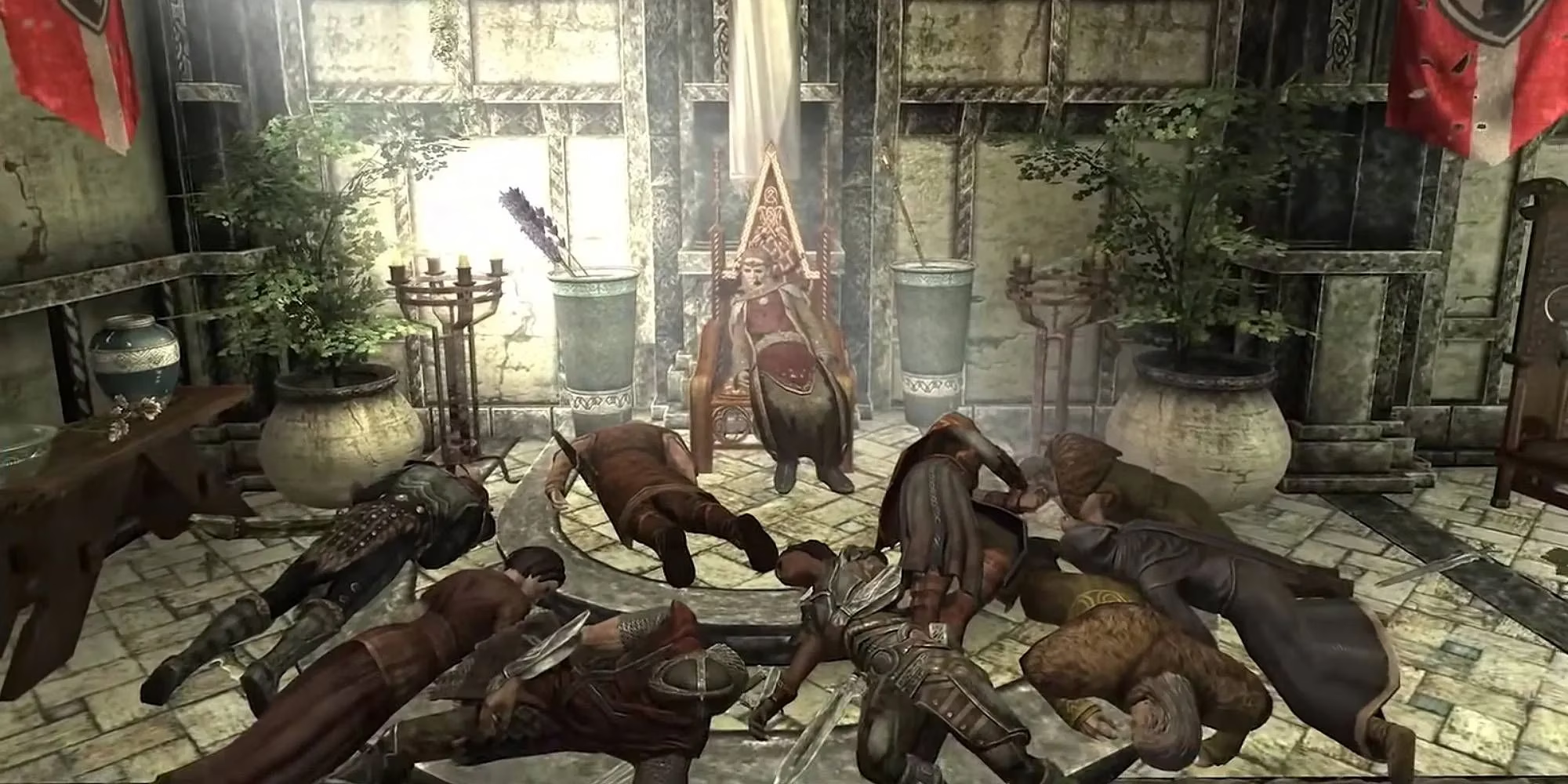
The titles with the longest shelf life are often the ones that reward messing around. They possess deep, interlocking systems that can say “yes, and…” to player chaos. Skyrim is the classic example. It has been modded, broken, rebuilt, and replayed across multiple console generations. Players still find new ways to stack buckets, launch objects, and trigger absurd NPC behavior.
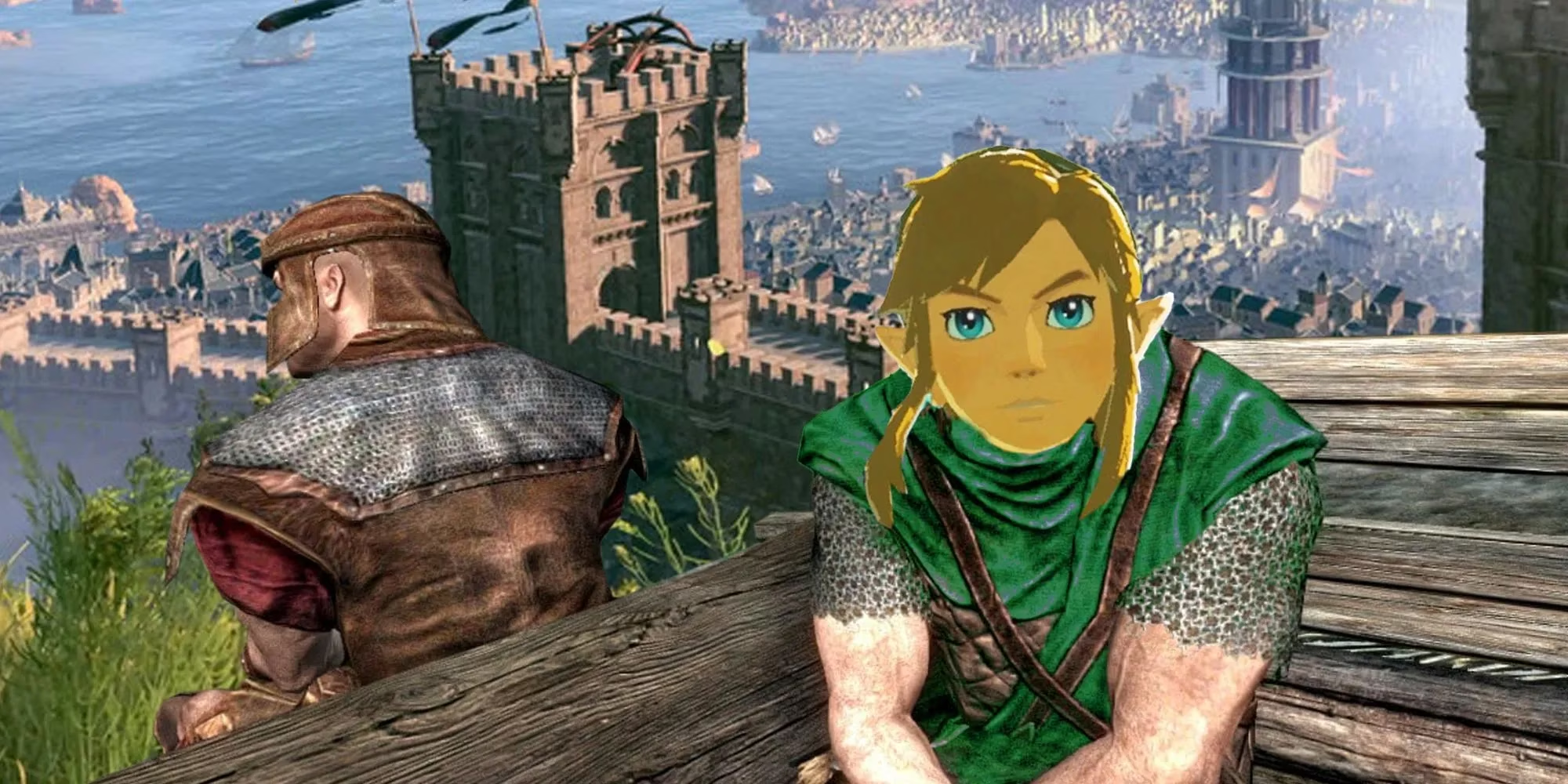
Breath of the Wild and Tears of the Kingdom operate in the same space. The latter inspired ridiculous aircraft, drone-launching machines, and the discovery that crystal spikes could be used to play music. Crusader Kings 3 and Dwarf Fortress thrive on emergent stories that no scripted quest could replicate. Starfield’s ability to simulate thousands of objects at once went viral more than once after launch. Baldur’s Gate 3 generated headlines about romantic entanglements and the simple, satisfying discovery that stacking crates could bypass a locked ledge.
These experiences let people tell stories to their friends about events that may never appear in another playthrough. A player might describe a bizarre physics accident in Skyrim, a political betrayal in Crusader Kings 3, or a five-way romantic disaster in Baldur’s Gate 3. That word of mouth is organic, persistent, and free. It does not require a store rotation or a season pass. It requires a system that respects player curiosity.
Why Systemic Chaos Creates Forever Games 🔁
A live-service game is a service, and services end. A systemic single-player game is a toy box, and toy boxes rarely close. Consider the difference:
| Live-Service Gambit | Systemic Single-Player |
|---|---|
| Demands ongoing commitment | Respects a finite schedule |
| Depends on developer-made content | Generates player-made stories |
| Crowded by a few dominant titles | Many can coexist peacefully |
| Dies when servers shut down | Remains playable offline |
By 2026, the biggest hits of the previous few years have followed the systemic path. Baldur’s Gate 3, Tears of the Kingdom, Starfield, and countless simulation games have shown that players do not need a battle pass to return. They need systems that react, surprise, and occasionally break in hilarious ways.
The industry spent a decade asking how to make players stay. The games that actually stayed did not beg for daily logins. They simply left the door open, scattered a few fascinating rules across the floor, and let the stories happen. Gamers will still be playing Skyrim long after most live-service games are dead and gone. That is not a failure of live-service design. It is a lesson the rest of the industry is still learning.