The Legend of Zelda's Evolution: From Gameplay Pioneer to Narrative Vanguard
For four decades, the chronicles of Hyrule have unfolded across screens, each chapter a testament to the transformative spirit of interactive storytelling. The odyssey that began in 1986 has perpetually redefined its own horizons, with 2023's The Legend of Zelda: Tears of the Kingdom standing as a monumental zenith. While the franchise's legacy is built upon the bedrock of revolutionary mechanics and boundless exploration, a profound and subtle metamorphosis has been underway—a pivot towards the soul of the story, the heart of its characters, and the weight of its narrative tapestry. This tonal shift, long germinating in the rich soil of Hyrule's history, has blossomed fully, signaling a new era for the legendary series.
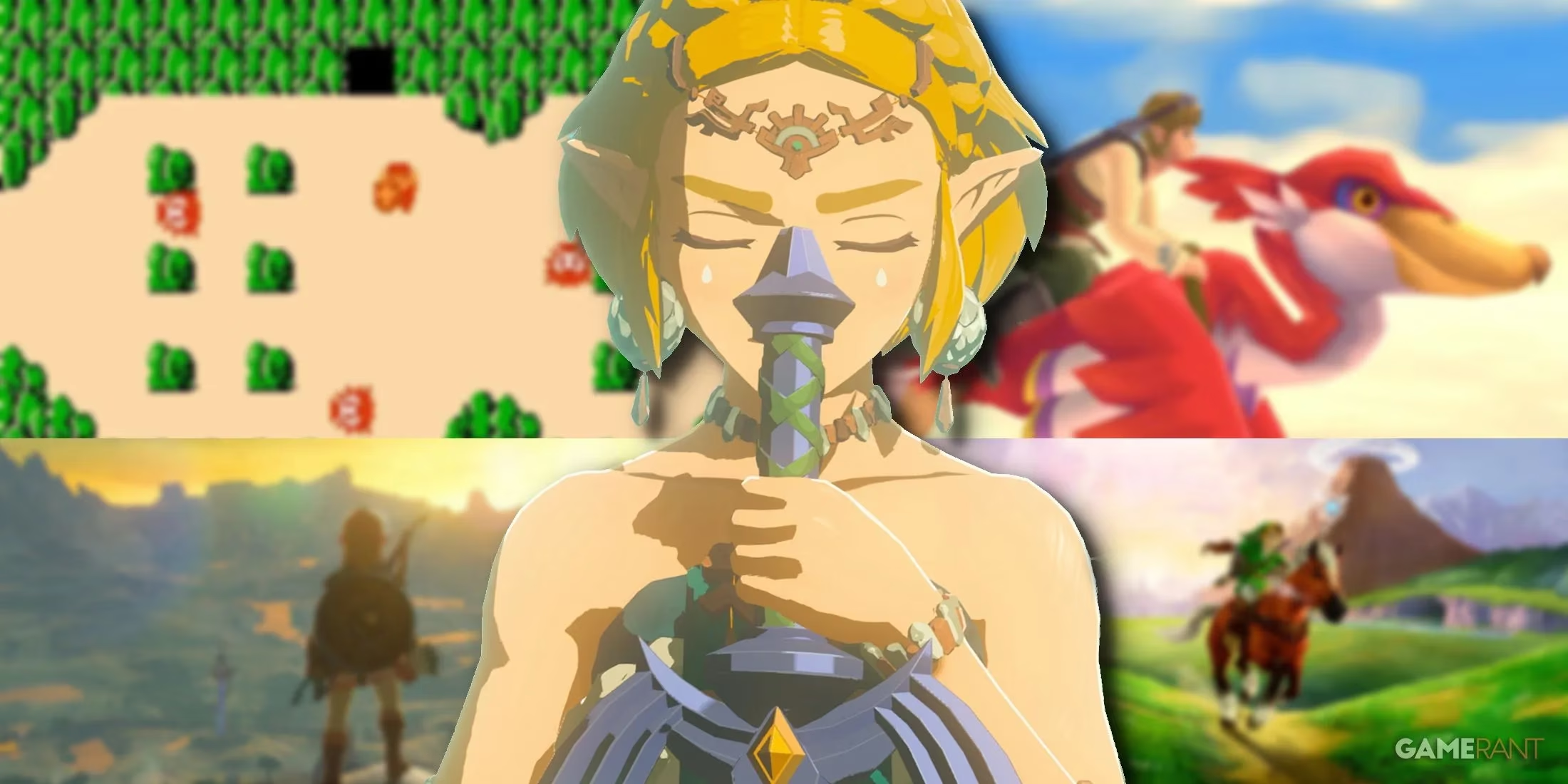
The Foundational Pillars: A Legacy of Innovation
Since its inception, the Zelda saga has been a lodestar for the gaming industry, charting courses into uncharted design territories. The series' journey is a chronicle of audacious leaps:
-
The 2D Genesis: The original title established the quintessential formula of exploration, puzzle-solving, and heroic quest.
-
The 3D Revolution: Ocarina of Time was a paradigm shift, introducing a living, breathing Hyrule in three dimensions. It pioneered mechanics that became industry staples:
-
Multi-layered dungeon architecture and environmental puzzles.
-
The manipulation of time itself as a core gameplay element.
-
Contextual actions that deepened player immersion.
-
-
The Age of Expansion: Subsequent adventures pushed the physical boundaries of the world, granting Link command of the seas, the skies, and even his own form through transformative magic.
This relentless pursuit of mechanical excellence reached its apotheosis in 2017. 😲
The Open-World Catalyst: Breath of the Wild's New Foundation
Breath of the Wild was not merely an entry; it was a renaissance. It dismantled the established structures and rebuilt Hyrule as a vast, systemic wilderness governed by player agency and emergent possibility. Its contributions were foundational:
| Gameplay Aspect | Innovation Introduced | Impact on Tone |
|---|---|---|
| Exploration | A truly open, non-linear world with physics-based interaction. | Fostered a tone of solitary wonder and self-directed discovery. |
| Combat | A modernized system with perfect dodges, flurry rushes, and weapon durability. | Created a rhythm of tense, skill-based encounters. |
| Narrative Structure | Fragmented, environmental storytelling; memories unlocked out of sequence. | Established a melancholic, pieced-together historical tapestry. |
While its narrative was poignant, it remained ambient—a backdrop to the player's personal journey. The ultimate battle with Calamity Ganon could be faced at any moment, placing the emphasis squarely on mechanical preparedness. This philosophy set the stage, but it was the sequel that would build upon it with narrative intent.
The Narrative Ascension: Tears of the Kingdom's Profound Character
Tears of the Kingdom arrived not to reinvent the wheel of exploration, but to deepen the well of emotion from which its world springs. It achieved this through a masterful focus on characterization and mythos. The game's true groundbreaking addition was not just a new set of Zonai devices, but the intricate lattice of relationships and histories it wove.
For the first time, the supporting cast—the Sages—were not merely archetypal allies but characters endowed with distinct motivations, fears, and arcs. The ancient Zonai civilization was explored not as a mere aesthetic, but as a philosophical and cultural force central to Hyrule's origin. Most significantly, the game dedicated profound narrative space to its central figures:
-
Princess Zelda: Her journey transcended the damsel-in-distress or distant monarch tropes. She became an active, driving force of sacrifice and resilience, her personal saga forming the emotional core of the entire adventure.
-
The Demon King: Ganondorf was presented not as a primal force of evil, but as a cunning and patient strategist, his centuries-spanning plan granting him a terrifying gravitas.
This narrative depth created a story where the stakes felt intimately personal and historically monumental simultaneously. The game proved that complex, character-driven storytelling could coexist with, and even enhance, the series' signature sense of adventurous freedom.
The Future's Tone: A Call for Mature Chronicles
As we look toward the horizon of 2026 and beyond, the path forward for the Legend of Zelda series is illuminated by the narrative beacon lit in Tears of the Kingdom. The franchise stands at a precipice, ready to embrace a future where story is not a companion to gameplay, but its equal partner. The tonal shift is clear: from tales of heroic action to sagas of profound consequence.
Future iterations are poised to explore more mature and nuanced themes, building upon the foundational character work now established. Whispers on the wind—though unverified—suggest Nintendo may already be nurturing this seed, with rumors hinting at projects that could place narrative at the forefront. The community waits with bated breath for the next revelation, knowing that the next chapter may very well be the most emotionally resonant yet.
The legacy of Zelda is secure as a pioneer of play. Now, it prepares to pioneer the soul. The green tunic of the hero will always be a symbol of courage, but henceforth, it may also be a vessel for a deeper, more contemplative kind of bravery—one measured not just in sword strokes, but in the weight of history, the complexity of relationships, and the silent, steadfast resolve to protect a world worth saving because we have come to understand its heart. The legend continues, but its voice has found a new, more resonant timbre. 🗡️🛡️✨