The Future of Hyrule: How Tears of the Kingdom Could Unlock a New Era of Zelda Timelines in 2026
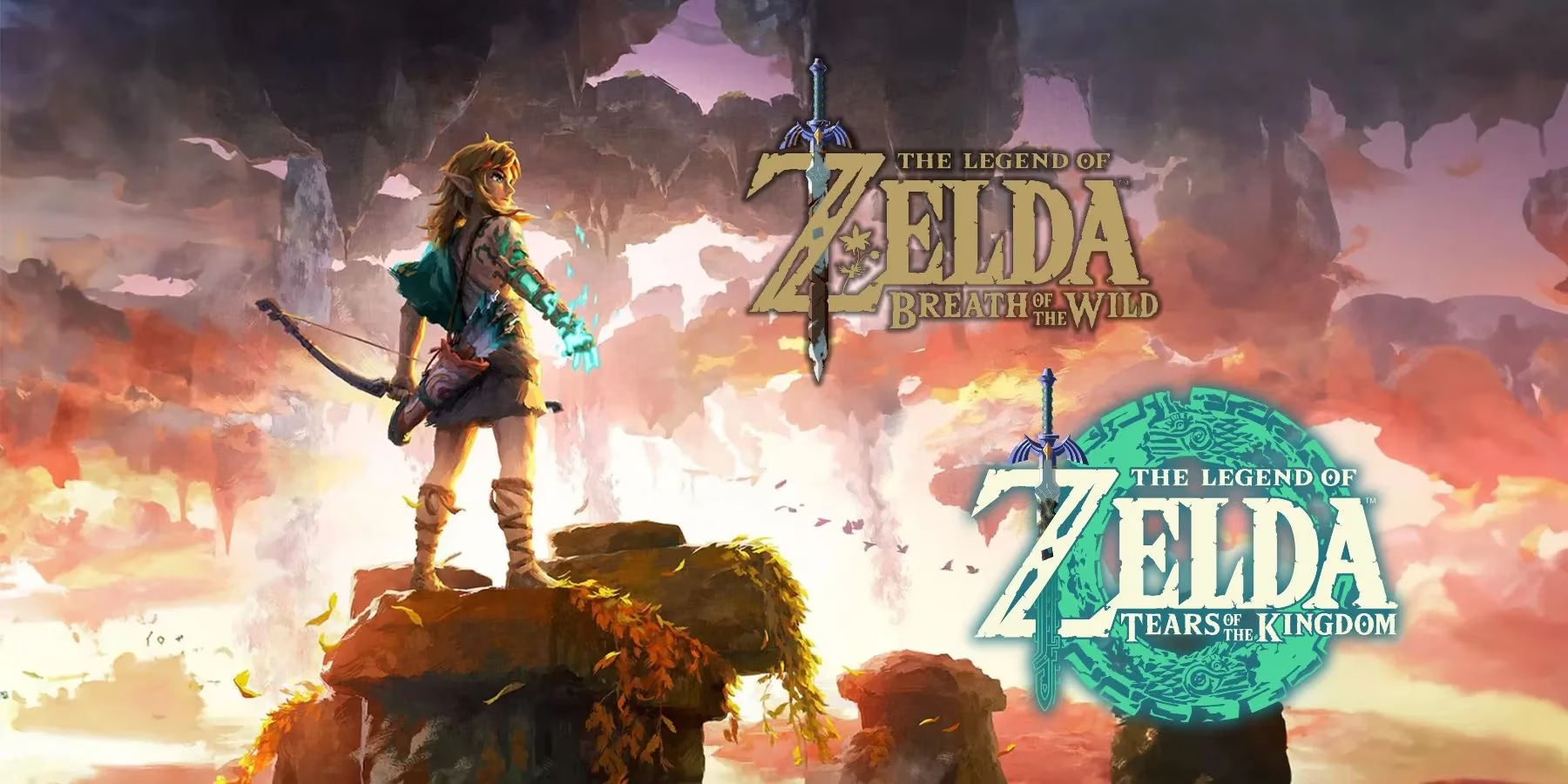
As the dust settles on the Era of the Wilds with the monumental releases of The Legend of Zelda: Breath of the Wild and its direct sequel, Tears of the Kingdom, the canonical future of the franchise stands at a pivotal crossroads in 2026. While it was confirmed that Breath of the Wild resided at the furthest known endpoint of the series' sprawling chronology, its sequel's position as a direct continuation solidified a new, singular timeline. This consolidation, however, has sparked fervent discussion among fans and analysts alike, raising profound questions about where Nintendo can—or should—go next. Given the unprecedented critical and commercial success of these open-air adventures, often hailed alongside classics like A Link to the Past and Ocarina of Time, the pressure is on for Nintendo to navigate the legacy of Hyrule's past while forging its future.
The Logical Case for a Second Great Schism
Despite the potential for controversy, a second major split in the Zelda timeline is increasingly viewed not as a narrative retreat, but as a necessary evolutionary step. The original, retroactively confirmed split served as a narrative keystone, a conceptual loom that wove together the series' disparate eras into a cohesive, if complex, tapestry. It granted Nintendo the creative liberty to explore radically different tones and gameplay ideas, from the oceanic exploration of The Wind Waker to the twilight-shrouded realms of its namesake title. The consolidation post-Tears of the Kingdom, while providing a definitive endpoint, paradoxically threatens to constrict that very freedom for any games set thereafter. A new branch would act as a pressure valve for creativity, releasing the narrative potential pent up at the conclusion of the Wilds saga and allowing the series to diverge into bold, uncharted territories once more.
Tears of the Kingdom stands as the perfect catalyst for this new divergence. Its position at the chronological terminus of the original timeline, coupled with its critical acclaim and rich, layered story involving Link, Zelda, and the ancient Demon King Ganondorf, provides a foundation of immense narrative weight. To ignore this opportunity would be to let the franchise's most fertile ground for new stories lie fallow. The parallels to Ocarina of Time—a game whose own climax famously fractured the timeline—are unmistakable, suggesting history may be poised to rhyme in a spectacular fashion.
Seeds of Divergence in the Era of the Wilds
The narrative architecture of the Wilds era is already rife with branching points, much like a geode cracked open to reveal a universe of crystalline possibilities. The infamous "Downfall Timeline" was born from a single hypothetical: Link's defeat at the hands of Ganondorf in Ocarina of Time. Applying this speculative logic to the events of Breath of the Wild and Tears of the Kingdom opens a multitude of dark and intriguing avenues for Nintendo to explore. The canonical victories of Link and Zelda are but one thread in a vast tapestry of potential outcomes.
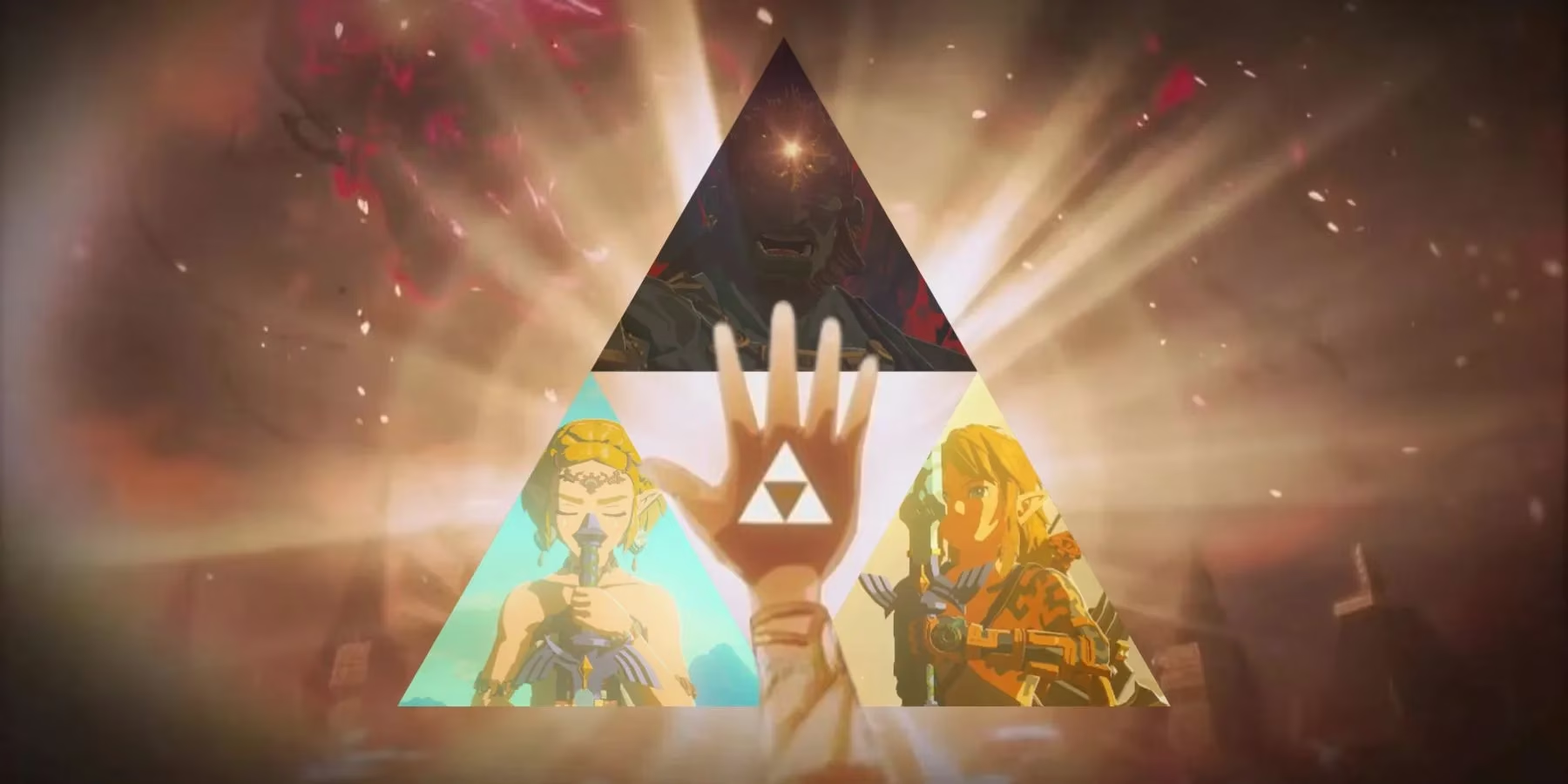
Consider the following potential branch points, each a foundation for an entirely new Hyrulean future:
| Branch Point Source | Potential Divergence & Consequence |
|---|---|
| Breath of the Wild | Link is defeated by Calamity Ganon and cannot be resurrected by the Shrine of Resurrection, leading to a world permanently scarred by the Great Calamity. |
| Breath of the Wild / TOTK Bridge | Link defeats Calamity Ganon but is later overwhelmed by the resurgent, full-power Ganondorf uncovered in Tears of the Kingdom. |
| Tears of the Kingdom | Link triumphs over Ganondorf but fails in the parallel quest to rescue Princess Zelda from her draconian fate, altering the royal lineage and the nature of wisdom itself. |
| Tears of the Kingdom (Past) | The ancient battle between Ganondorf, Princess Zelda, and the Zonai sage Rauru concludes differently, reshaping the entire foundational history of the Wilds era. |
Unlike the singular branching event of Ocarina of Time, the two-game arc of the Wilds era offers multiple junctures for divergence, allowing for more nuanced and varied "what-if" scenarios. This richness provides Nintendo with a veritable toolkit for timeline construction.
Managing a Multi-Branched Future
The practicalities of managing multiple concurrent timelines are daunting but not insurmountable. Where the original schism resulted in three branches (the Child, Adult, and Downfall Timelines), a second split could see Nintendo confidently steering four or more distinct canonical streams. The key would be clear, deliberate branding and narrative demarcation—perhaps through distinct visual styles, core mechanics, or even subtitle conventions—to help players navigate the multiverse. The alternative, continuing solely along the "victory" path of the Wilds era, risks narrative exhaustion or a forced regression to earlier, less popular historical periods in Hyrule's past.
Ultimately, the future of The Legend of Zelda in 2026 and beyond hinges on Nintendo's willingness to embrace the narrative complexity it has cultivated for decades. The Era of the Wilds has provided the perfect storm: conclusive endings that invite speculation, beloved characters at the height of their power, and a fanbase more engaged than ever. To split the timeline again would be a bold affirmation of the series' legendary capacity for reinvention, ensuring that the Hero's spirit—and the saga it carries—will have new horizons to chase for generations to come.