The Enduring Ingenuity of Hyrule: Remote Cannons and the Legacy of Tears of the Kingdom
Even in 2026, the vibrant world of Hyrule continues to pulse with the inventive spirit of its inhabitants. The echoes of Link's battle against Ganondorf's dark forces have long since faded, but the legacy of creativity born from The Legend of Zelda: Tears of the Kingdom endures. Players, armed with the game's revolutionary Zonai crafting mechanics, have never truly stopped exploring, building, and occasionally bending the very rules of the kingdom to their will. This ongoing journey of discovery is a testament to the game's design, where intentional systems and accidental quirks combine to form a sandbox of limitless potential.
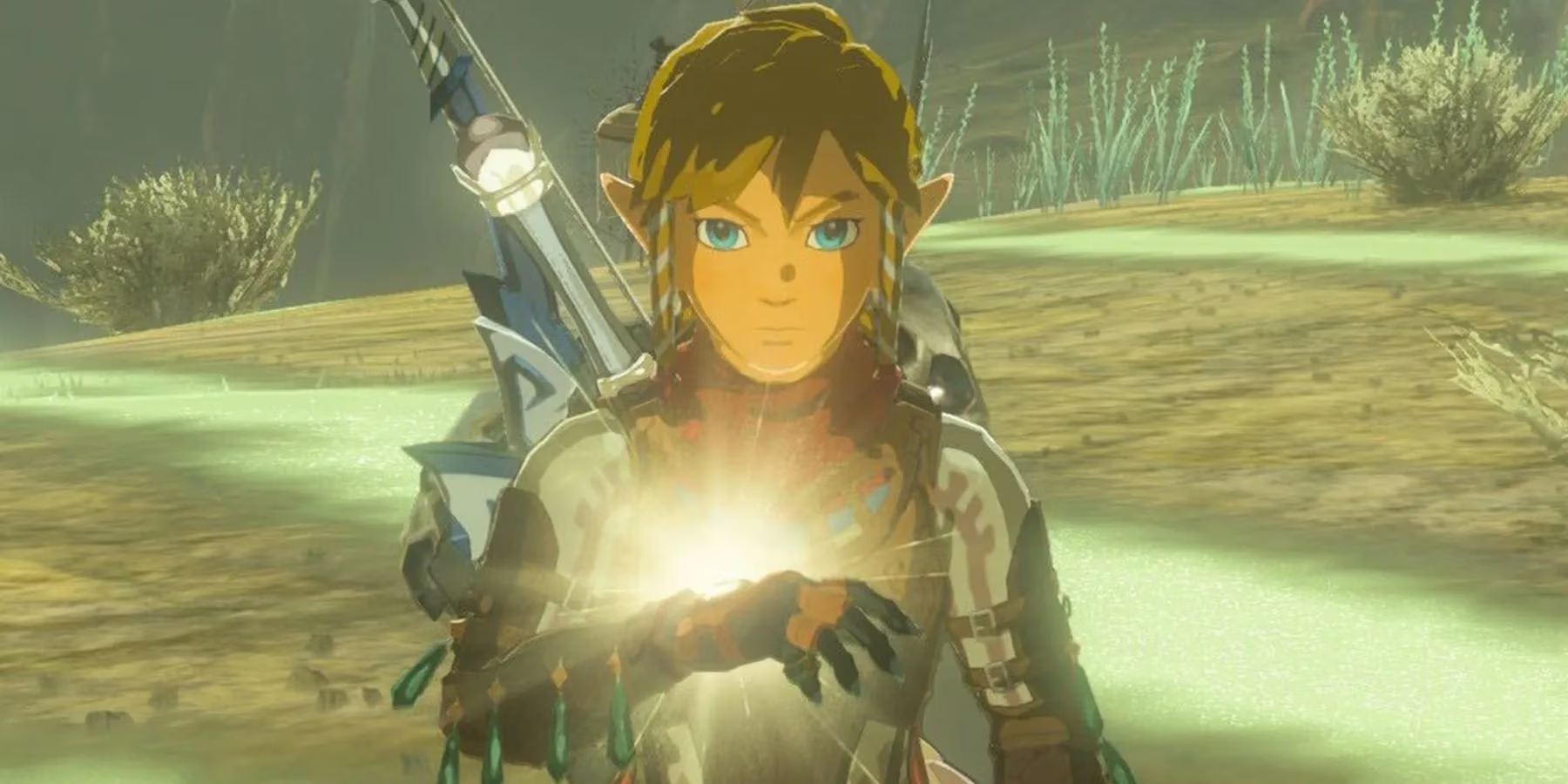
Among the most fascinating relics of this era is the story of a stationary, remote-fired cannon. Crafted not just from Zonai devices but from a clever fusion of discovered glitches, this weapon represented a peak of player-driven engineering. A resourceful adventurer, known online as Styles1991, pieced together this puzzle. The core of the invention relied on a series of well-documented technical oddities within the game's code, most notably the "message not found" glitch associated with the Master Sword. This exploit, which once allowed the legendary blade to function with seemingly infinite durability, became a crucial component in a much larger scheme.
The resulting contraption was deceptively simple in its operation yet complex in its assembly. By weaving these glitches together, the creator managed to tether a Zonai Cannon's firing mechanism to the swing of Link's sword. A mere flourish of the Master Sword in any direction would command the distant cannon to unleash its payload. This removed the hero from direct danger, allowing for strategic, remote bombardment of enemy encampments or particularly stubborn geological formations. The community's reaction was a mix of awe and amused frustration; while many wished for clearer blueprints, all were impressed by the sheer cleverness on display. It proved that years after the game's launch, its depths were still not fully plumbed.
This single invention sits within a much broader tapestry of player ingenuity that defined the Tears of the Kingdom experience. The Zonai crafting system was merely the starting point. From it, the community engineered wonders that would make even the ancient Zonai architects nod in approval:
-
Aerial Assault Platforms: Multi-stage flying machines that used clusters of cannons not for attack, but as volatile, high-thrust propulsion systems to achieve incredible altitudes.
-
Gatling Sentries: Automated defensive towers powered by sprawling Zonai battery arrays, capable of laying down a continuous hail of energy bolts.
-
Siege Rollers: Mobile, player-piloted tanks with manually aimed cannons, designed to roll directly into the heart of enemy fortifications.
These creations were more than just tools for combat; they were expressions of a problem-solving mindset that the game nurtured. The freedom to fail, experiment, and ultimately succeed with a wildly improbable vehicle or weapon was the game's true gift.
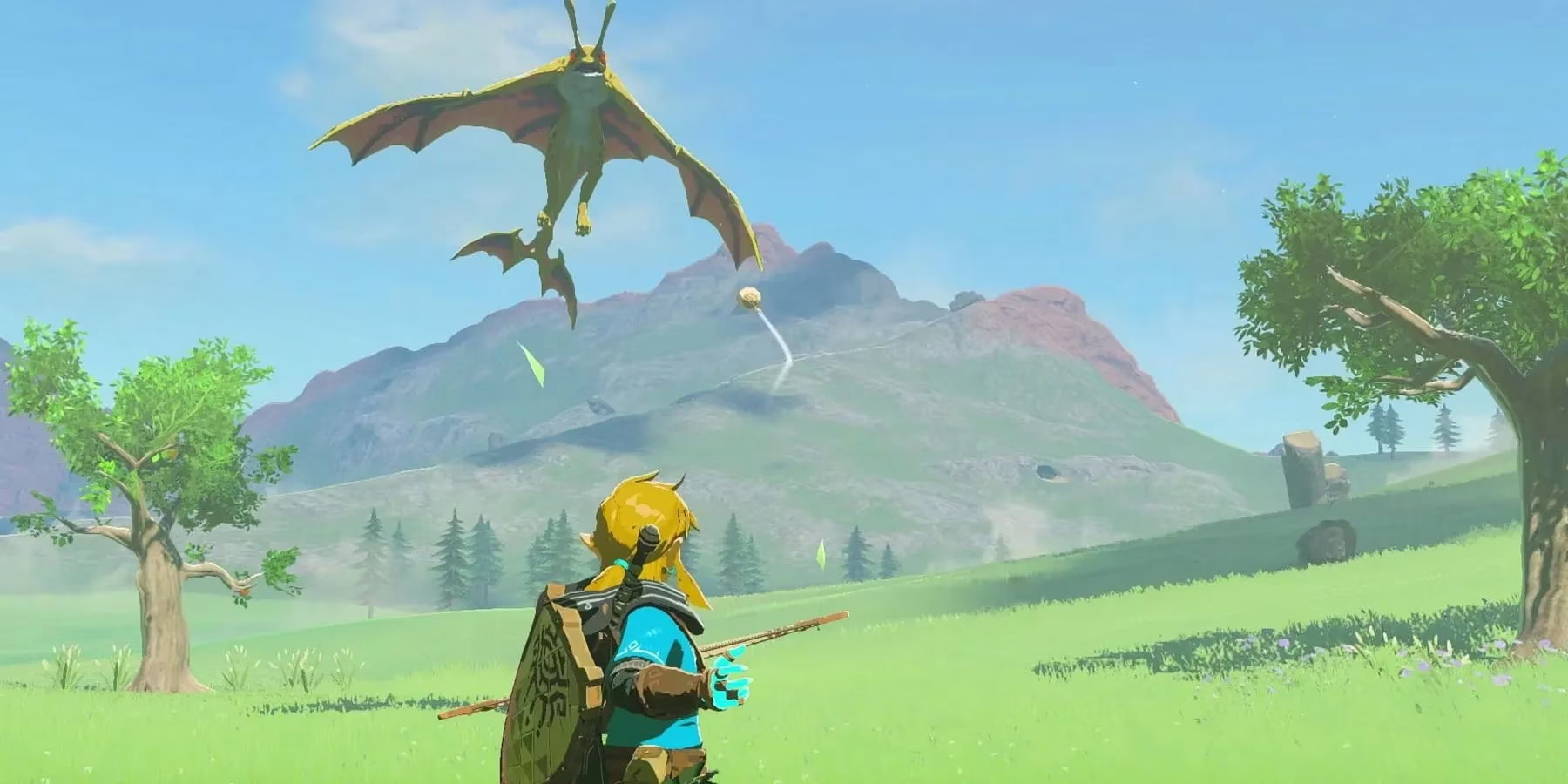
Nintendo's periodic updates over the years did smooth over some of the more game-breaking exploits, gently guiding the experience back toward its intended vision. The specific glitches that powered the remote cannon, for instance, have been consigned to history. Yet, this never stifled the community's spirit. Instead, it shifted the focus. Players began to master the intended systems with even greater depth, finding new, legitimate synergies between devices that the developers might not have foreseen. The quest for efficiency, elegance, and sheer spectacle in construction became the new endgame.
As the years have passed and the gaming world looks toward the future of the Legend of Zelda series, the enduring activity within Tears of the Kingdom stands as a powerful case study. Its longevity is not solely rooted in its critical story or expansive map, but in the profound agency it granted its players. The remote cannon was not a quest reward or a hidden treasure; it was a player's idea, forged from the raw materials of the game's physics and their own persistence. It symbolizes a world that truly felt alive, responsive, and malleable. In the quiet, persistent hum of a Zonai device or the shared schematic of a clever machine, the kingdom of Hyrule continues to teach a valuable lesson: the greatest adventures are often the ones you design for yourself. 🗡️⚙️✨
The community's archives are now filled with these blueprints and stories, serving as both a museum of past ingenuity and a challenge to newcomers. Even now, someone, somewhere, is likely fusing a homing cart with a flame emitter and a balloon, asking "what if?"—proving that in this corner of Hyrule, the spirit of discovery is truly eternal.