Tears of the Kingdom's Patent Bramble Is Quietly Suffocating Future Game Design
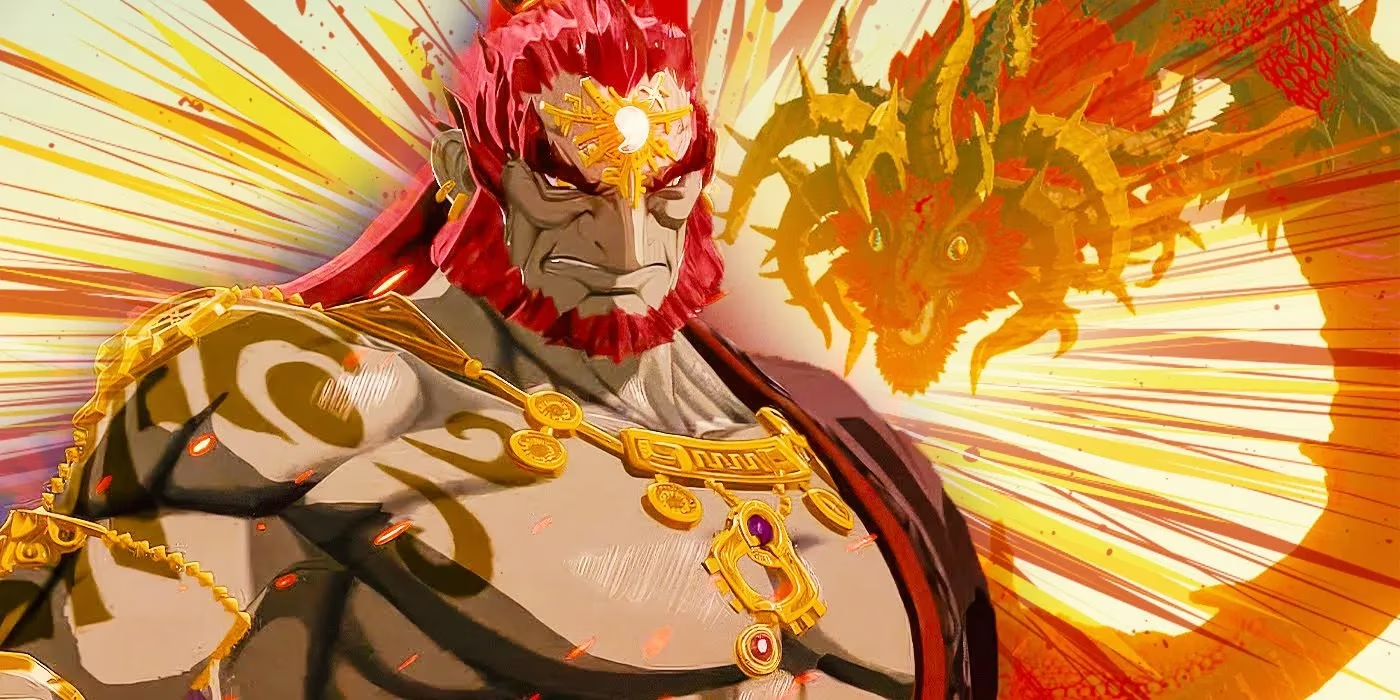
Long after the final tear had been gathered and the credits had rolled, a quieter story began to unfold in Kyoto's legal offices. By the time 2026 arrived, The Legend of Zelda: Tears of the Kingdom no longer stood only as a triumphant sandbox; it had also become a cold bramble of legal thorns creeping over a once-open meadow. Nintendo had filed a constellation of patents tied to the game's construction systems, physics interactions, and even its loading transitions, and each filing looked less like protection than a snare set along a path future developers might have walked.
Some players still kept fond memories of the game's open-ended chaos. They remembered fusing rockets to shields, building a wobbling plank bridge, and watching an arrow call down a lightning strike from the sage Riju. But outside Hyrule, those exact design flourishes were being catalogued as company property. The most lasting legacy of Tears of the Kingdom might therefore be negative — not because the game failed, but because its legal shadow could keep other creators from refining the same ideas.
The Nemesis Precedent and the Loading Screen Ghost
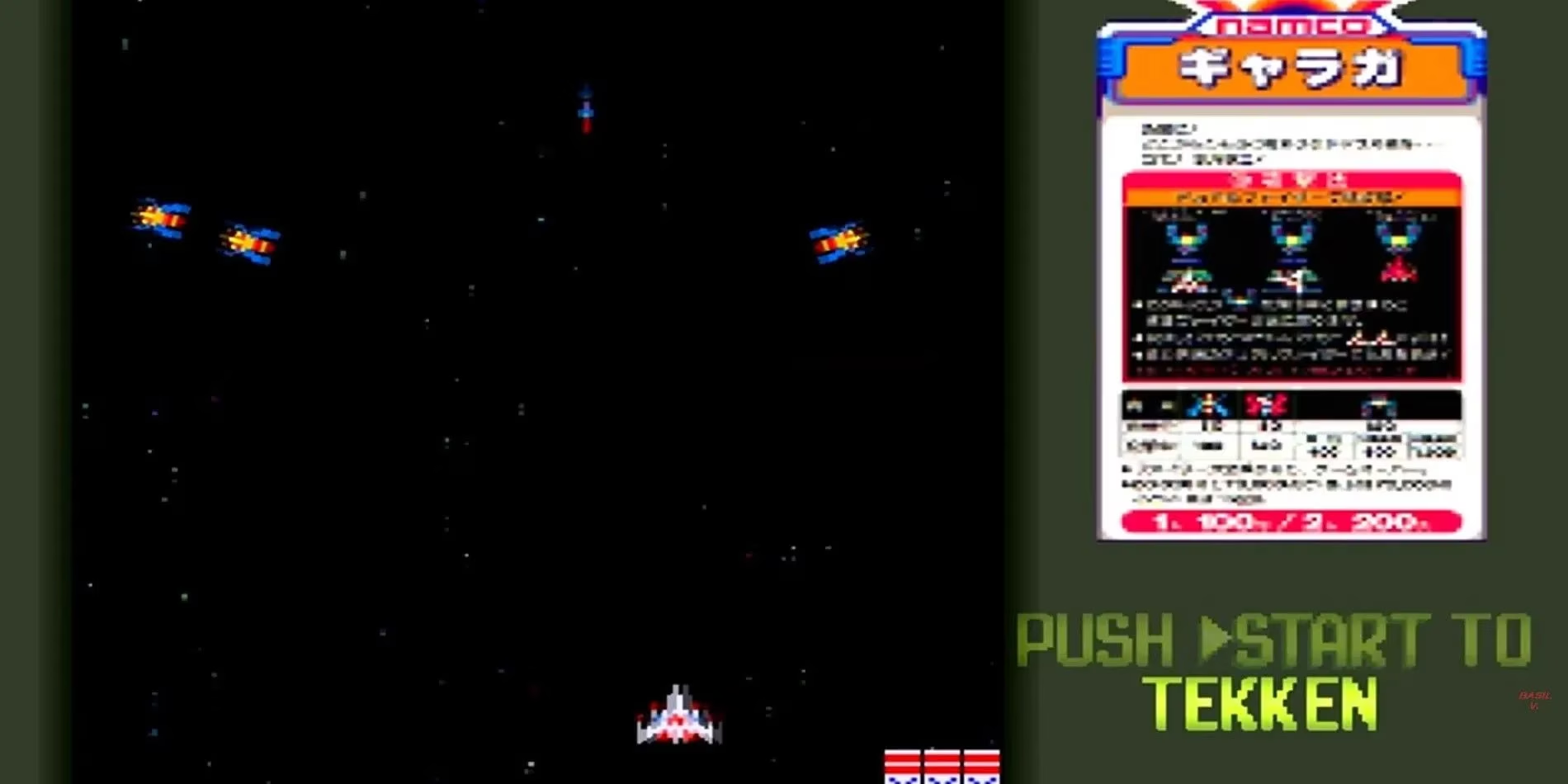
The damage caused by patent overreach was already written into gaming history. Warner Bros. had famously patented the Nemesis System from Middle-earth: Shadow of Mordor, an innovation that could have blossomed into a new subgenre of reactive NPC hierarchies. Instead, it became a locked room. Similarly, Namco's patent on loading screen mini-games arrived during the original PlayStation generation, when disc-based games could take minutes to load. Early Tekken titles offered a legacy arcade game while players waited, but other developers were forced to show static bars. The result was that an entire era of players spent avoidable hours staring at frozen screens. Namco's patent expired around ten years later, conveniently after SSDs had already begun to erase the problem it had monopolized.
Nintendo's Tears of the Kingdom patent bundle follows the same pattern, but its potential footprint may be even wider. A developer who wants a physics object to remain stationary when a character stands on it, a common balance necessity, may hesitate if Nintendo's code-level claim resembles the same rule. Monopolizing such a mechanic is like patenting the idea of gravity in a game engine: everyone needs it, but only one house gets to use the cleanest version.
What the Patents Actually Reach
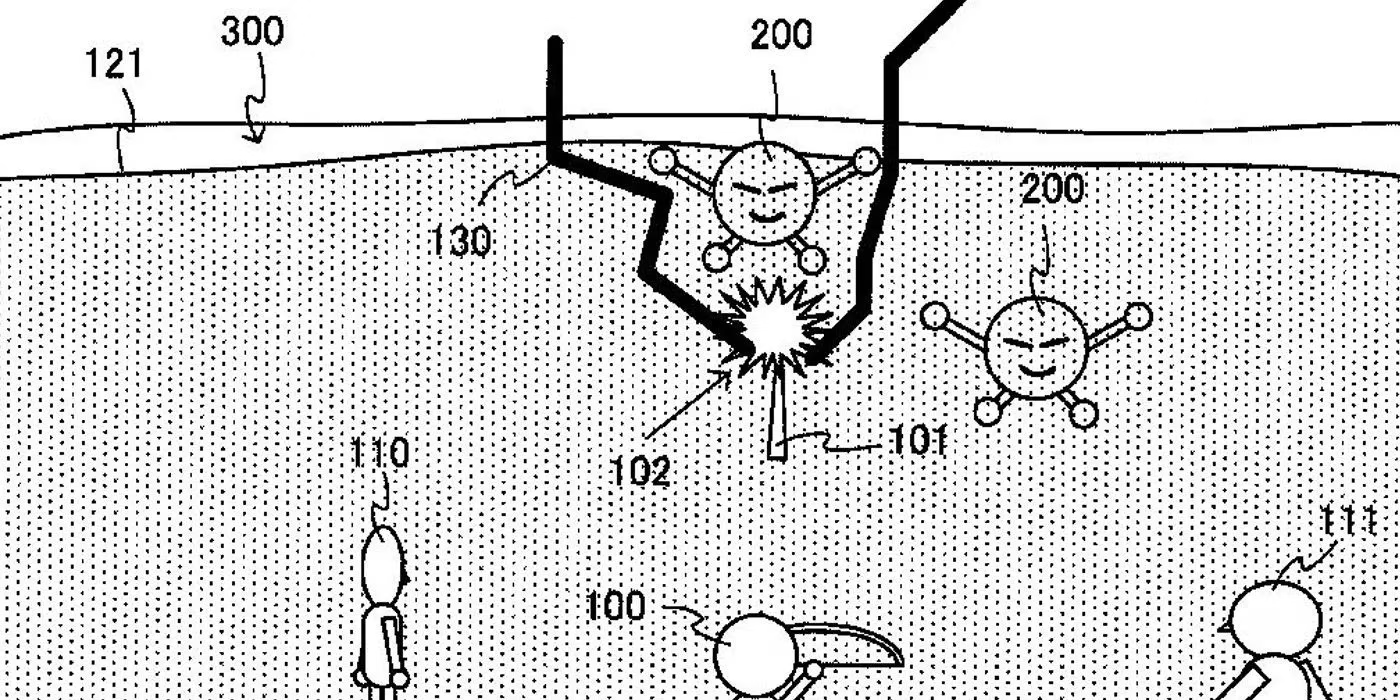
The reported filings include mechanical interactions that predate Tears of the Kingdom in broad function, if not in exact code. An arrow that triggers an ally's lightning strike is an elemental combo attack, a concept found in tabletop RPGs and earlier games. The Ultrahand restriction that prevents an object from moving while Link stands on it is a common-sense balance rule. Player movement synced with an independently sliding platform, such as a player-built minecart, is the kind of physics behavior that should be shared tooling, not exclusive property.
Some of the contested elements include:
-
⚡ Firing an arrow that calls Riju's lightning attack
-
🧲 Ultrahand's inability to move an object the player is standing on
-
🛤️ Syncing Link's movement with a moving constructed object
-
🌀 Fast travel transitions used as disguised loading visuals
In 2026, the industry is still wrestling with these claims. Even if some patents may prove difficult to enforce, the threat of litigation has a chilling power all its own. An independent studio prototyping a physics-driven puzzle game will likely avoid mechanics that feel even slightly similar. That is the real injury: not a single courtroom loss, but a thousand abandoned ideas.
A Dead-End Instead of a Legacy
Tears of the Kingdom felt like more than a Breath of the Wild expansion. Its on-the-fly crafting and open-ended physics puzzles inspired players to imagine a future full of similar freedom. Games that inspire refinement usually become landmarks. Yet when a publisher surrounds those ideas with legal fencing, it converts a potential legacy into a dead-end street.
The history of the medium offers clear warnings. If Harvest Moon had patented the farming sim, Stardew Valley might never have existed. If Splinter Cell had controlled over-the-shoulder aiming, Resident Evil 4 could have been voided. The path from inspiration to improvement depends on movement, and patents can freeze that movement mid-step.
Nintendo has every corporate right to protect its intellectual property. But for players, the thought of only one company being allowed to use the cleanest physics code, only one company being allowed to present a loading screen as something beautiful, should feel like a slow constriction around the medium's windpipe. Tears of the Kingdom may eventually be remembered as a great game. The question is whether it will also be remembered as the moment the industry let a single publisher fence off a piece of the sky.