Nintendo's Strict NDA Rules: Why Zelda Voice Actors Can't Fulfill Fan Requests
As fans gather at conventions in 2026, hoping for a personalized message from the voices behind their favorite Hyrulean heroes and villains, they often encounter a familiar, polite refusal. The cast of The Legend of Zelda: Tears of the Kingdom continues to operate under the same strict non-disclosure agreements (NDAs) established by Nintendo, a policy that has remained unwavering for years. This means that, unlike many other video game voice actors who participate in fan service through platforms like Cameo, the performers behind Link, Zelda, and the champions are contractually barred from recording custom lines for the public. For these actors, the world of Hyrule is a gilded cage—beautiful to inhabit but with clearly defined, unbreakable boundaries.
The Voice of the Princess Explains the Rules
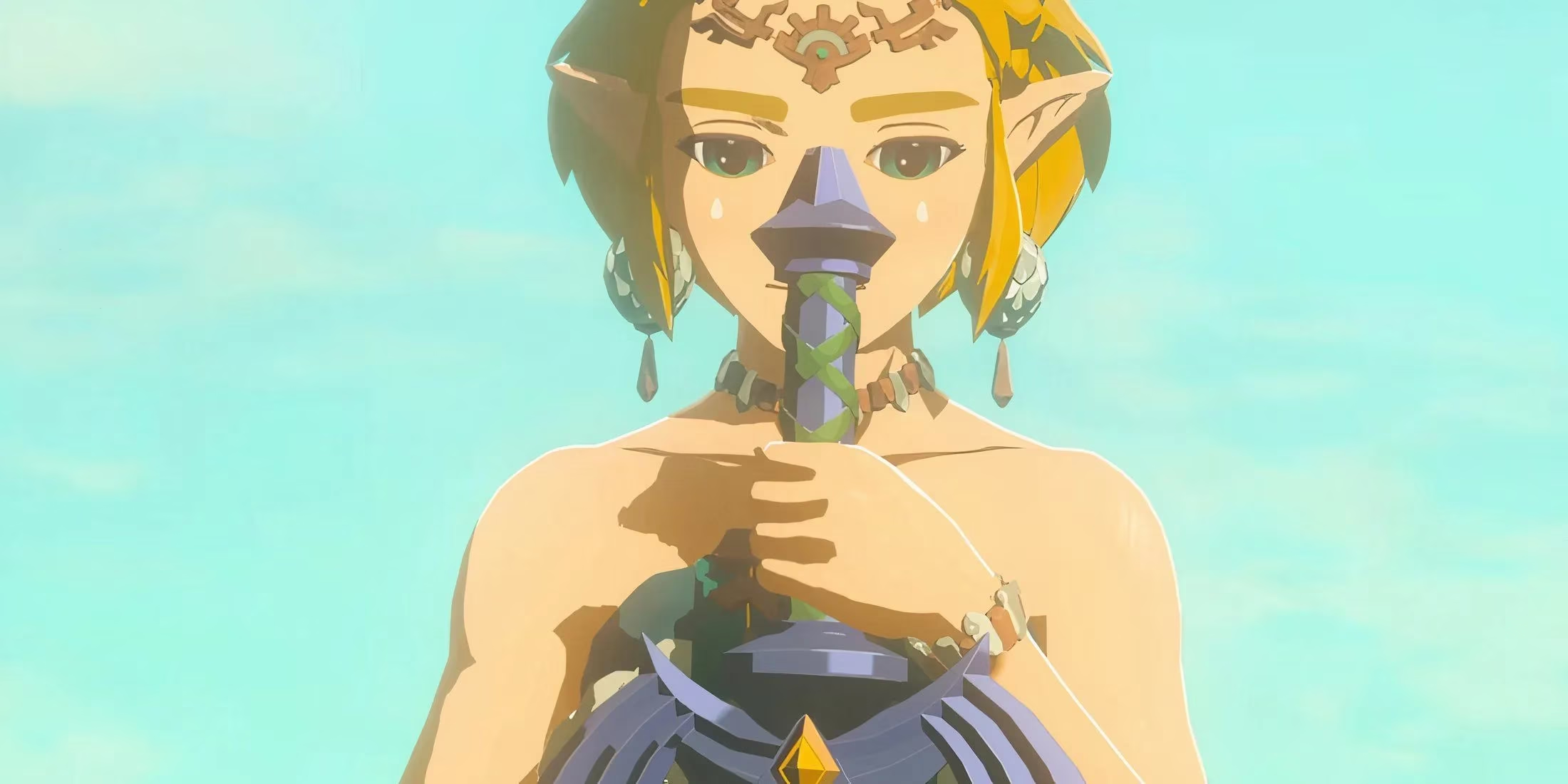
Patricia Summersett, the voice of Princess Zelda in the English dub, has been the most vocal in explaining this policy to disappointed fans. She describes the NDAs signed by the cast as "very strict," framing the issue not as corporate pettiness but as a fundamental matter of respect. "It's about respecting the intellectual property and Nintendo's rights," she has explained at events like MCM Comic Con. The character of Zelda, in her voice, is not a persona she can freely loan out; it is an asset owned and meticulously guarded by Nintendo. Summersett has shared that her compromise is a quiet, in-person whisper of a requested line to a dedicated fan—a fleeting, ephemeral gift as delicate as a Silent Princess flower, meant for that moment alone and never to be broadcast. This act is like a stage actor breaking the fourth wall for a single audience member, a secret shared but not a performance recorded.
The Potential Consequences of Stepping Out of Line
The restrictions are backed by serious professional implications. Sean Chiplock, who voiced the proud Rito champion Revali in Breath of the Wild, provided insight into the potential fallout. He speculated that while Nintendo might not immediately pursue legal action for a minor infraction, the true consequence would be excommunication from the kingdom. "It would most likely mean losing the opportunity to work with Nintendo again," he stated. For a voice actor, being blacklisted by one of the most iconic and consistent employers in the gaming industry is a career-ending move. The relationship between Nintendo and its contracted talent is thus akin to that of a master jeweler and a gem cutter; the cutter is entrusted with a priceless stone, but any attempt to create an unauthorized piece with the shavings would result in never being handed another gem again.
How This Compares to the Broader Voice Acting Industry
This policy places the Zelda cast in a distinct minority within the voice acting community. A common sight at fan conventions and on paid content platforms is actors from other major franchises happily recording quirky, personalized messages in their iconic character voices. They often perform a delicate dance of legal disclaimers, stating they are not representing the developer or "officially" portraying the character. A famous example is Steven Ogg, who, when asked to record a Cameo as his Grand Theft Auto V character Trevor, repeatedly clarified he was speaking as himself, not as Trevor. This loophole is not available to Nintendo's actors. Their contracts are so comprehensive that the character's voice is seen as an inseparable part of the IP itself. The difference is stark:
| Franchise/Company | Policy on Fan Recordings | Typical Actor Workaround |
|---|---|---|
| Nintendo (Zelda) | Strictly prohibited by NDA. | None. In-person whispers only. |
| Many Other Publishers (e.g., Rockstar) | Often tolerated with disclaimers. | Actor clarifies they are "not" the character officially. |
| Independent Projects | Usually encouraged for engagement. | Full character portrayal is common. |
Understanding Nintendo's Protective Philosophy
For those familiar with Nintendo's history, this approach is not surprising but is rather a consistent thread in the company's tapestry. Nintendo is legendary for its zealous protection of its intellectual property. Its defense of music, character likenesses, and game assets is more vigilant than a Lynel guarding its territory. This protectiveness stems from a desire to maintain a specific, curated experience and brand integrity. From a business perspective, uncontrolled use of its characters dilutes their value and can lead to brand misrepresentation. For the actors, adhering to these rules is simply the wisest course. Staying in Nintendo's good graces ensures potential future work in what may be gaming's most enduring and beloved franchise. The trust is as precise and fragile as the internal mechanism of a Sheikah Slate; once compromised, the entire device may cease to function for its intended user.
The Fan Perspective: Disappointment vs. Understanding
The fan reaction to this ongoing policy is mixed but increasingly understanding as time passes.
-
The Initial Disappointment: Many fans dream of having a voicemail greeting from the Sage of Wind or a motivational message from Princess Zelda herself. The blanket refusal can feel like a closed door.
-
The Growing Respect: However, as the actors openly and politely explain the reasons—framing it as respect for the art and the world rather than mere corporate restriction—many fans come to appreciate the stance. It preserves the "magic" and official sanctity of the characters.
-
The Silver Lining: The policy indirectly elevates the official in-game performances. Every line spoken by Zelda in Tears of the Kingdom carries the weight of being the only canonical performance, untouched by a million internet parodies or off-script recordings.
In the end, the silent protagonist Link remains an apt symbol for this dynamic. While others speak, the core of the adventure is defined by action within a world whose rules are set by its creators. The voices of Hyrule are magnificent, but they are meant to be heard only within the hallowed halls of the game itself, a principle Nintendo and its chosen vocal champions are committed to upholding into 2026 and beyond.