Nintendo's Patent Power Grab: Why Locking Up Game Mechanics Hurts Everyone
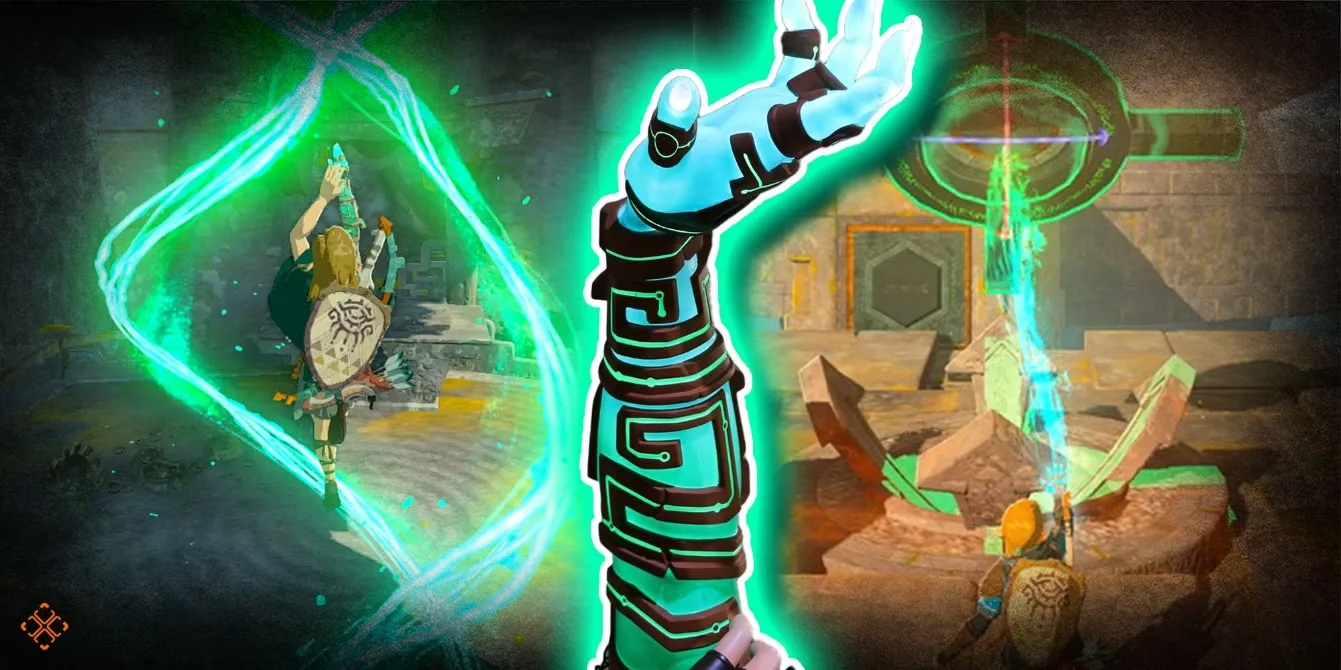
In 2026, the video game industry still hasn't shaken off a nasty patent hangover that made lawyers grin and designers groan. Back in 2023, Nintendo reportedly filed 32 gameplay-related patents, and 31 of them were tied to The Legend of Zelda: Tears of the Kingdom. Ultrahand, Fuse, hanging onto ledges, riding floating platforms — the company tried to own the building blocks of play. That isn't protection; it's a land grab. And when the biggest names in gaming start fencing off ideas, everyone else is left staring at a very expensive fence. 🎮
The Patent Land Grab
Patents on game mechanics are not new. Warner Bros. famously patented Middle-earth: Shadow of Mordor's Nemesis system. That mechanic made enemy NPCs remember players, hold grudges, learn from defeats, and climb the orc corporate ladder. It was the most praised part of the 2014 game. But outside Shadow of War, it never really escaped the vault. Assassin's Creed Origins, Odyssey, and Valhalla flirted with a smaller version — bounty hunters who stalk the player — but Ubisoft kept enough distance to avoid a lawsuit. Indie developers? They stayed away entirely. A brilliant idea became a museum piece. That is a shame, because gaming's best innovations often come from someone saying, 'Hey, that was cool. What if we did this with it?'
The Quiet Filers
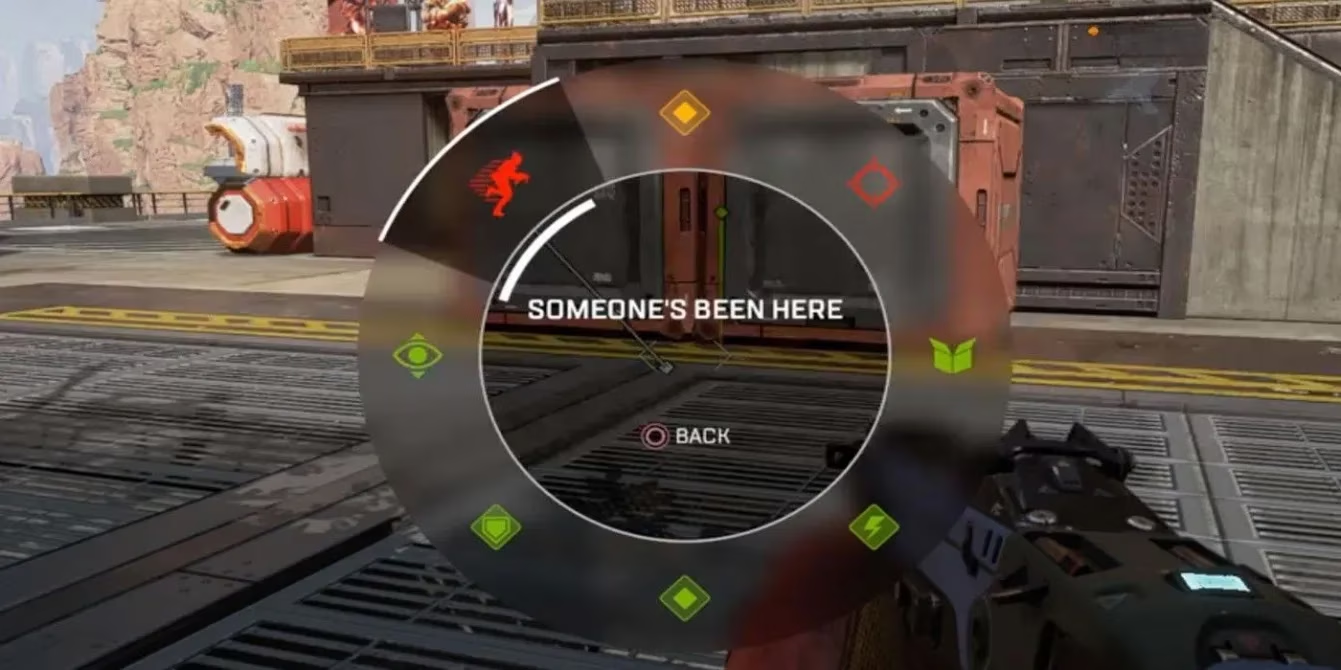
Nintendo is not alone. Bloober Team patented The Medium's single-player splitscreen 'dual-reality' gameplay. EA patented Apex Legends' ping system, which turned a simple communication tool into a genre standard. Whether these companies would actually sue another developer is almost irrelevant. The threat alone creates a chilling effect. Nintendo has proven itself litigious in other areas, so smaller studios have to ask: is this mechanic too close? Will a lawyer knock on the door? That fear is poison to creativity. It is blatantly anti-art and antithetical to how video games have been built since the earliest days of the medium.
Doom Clones and the Road Not Taken
The '90s provide a perfect counterfactual. id Software's Doom was not the first first-person shooter ever released — it was not even id's first — but it lit the fuse. For years, FPS games were called 'Doom clones.' That shared DNA led to Half-Life, Call of Duty, Titanfall 2, Overwatch, Unreal, Fortnite, Halo, and Destiny. If id had patented moving through a 3D environment while mowing down enemies from a first-person perspective, the industry would look completely different. Valve would not have made Half-Life. Activision would not have made Call of Duty. Respawn would not have made Titanfall 2. Blizzard would not have made Overwatch. Epic would not have had the Unreal success that eventually built Fortnite. Bungie would not have made Halo or kickstarted games-as-a-service with Destiny. Many of the last three decades' defining games simply would not exist.
Fear Is the Enemy of Creativity
Art should not be patented. Songs are allowed to sound similar; that is how genres form. Artists make art with similarities, then add key differences where their humanity shines through. Ed Sheeran faced a lawsuit over superficial similarities between 'Thinking Out Loud' and Marvin Gaye's 'Let's Get It On.' That was not theft. That was music doing what music does. The same logic applies to games. By patenting mechanics, Nintendo is trying to draw restrictive lines around what other people can create. The industry cannot survive if it becomes illegal to do the very things that let it move forward.
The 2026 Chill
In 2026, the patent threat still looms. Maybe Nintendo never sues a small studio. Maybe Warner Bros. never goes after a Nemesis-like indie darling. But the chill is real. Developers self-censor. Publishers avoid risk. Genres stagnate. The next Ultrahand, the next ping system, the next Nemesis system might be locked in a legal drawer instead of a game. That would be the biggest threat of all. 🕹️
| Patented Mechanic | Owner | Why It Matters |
|---|---|---|
| Nemesis system | Warner Bros. | Enemy memory and hierarchy never got a fair indie evolution |
| Ping system | EA | A communication standard became a legal question mark |
| Dual-reality splitscreen | Bloober Team | A clever camera trick stayed mostly in one game |
| Ultrahand / Fuse | Nintendo | Core sandbox creativity now has a patent-shaped shadow |
Gaming has always been a conversation. One developer builds a ladder, another climbs it, and a third turns it into a rocket ship. Patents on mechanics turn that conversation into a courtroom. The industry needs shared ideas, not locked gates. It needs fearless experimentation, not legal anxiety. Otherwise, players will keep getting sequels, remakes, and safe bets — while the truly wild ideas die in a filing cabinet. And that, dear readers, is how you patent the fun right out of video games.