My Look at the 2026 Best-Selling Nintendo Switch Games
As I sit down to write this in early 2026, the Nintendo Switch has officially become the best-selling game system in Nintendo’s history, eclipsing even the legendary Nintendo DS. It’s a remarkable achievement for a console that blended home and portable play so seamlessly, and the library of games is the single biggest reason for its longevity. As a gamer who has owned a Switch since launch day, I’ve watched the sales charts evolve through countless Nintendo financial reports, and the latest update continues to tell a story of familiar juggernauts holding strong while a few recent titles shake up the established order.
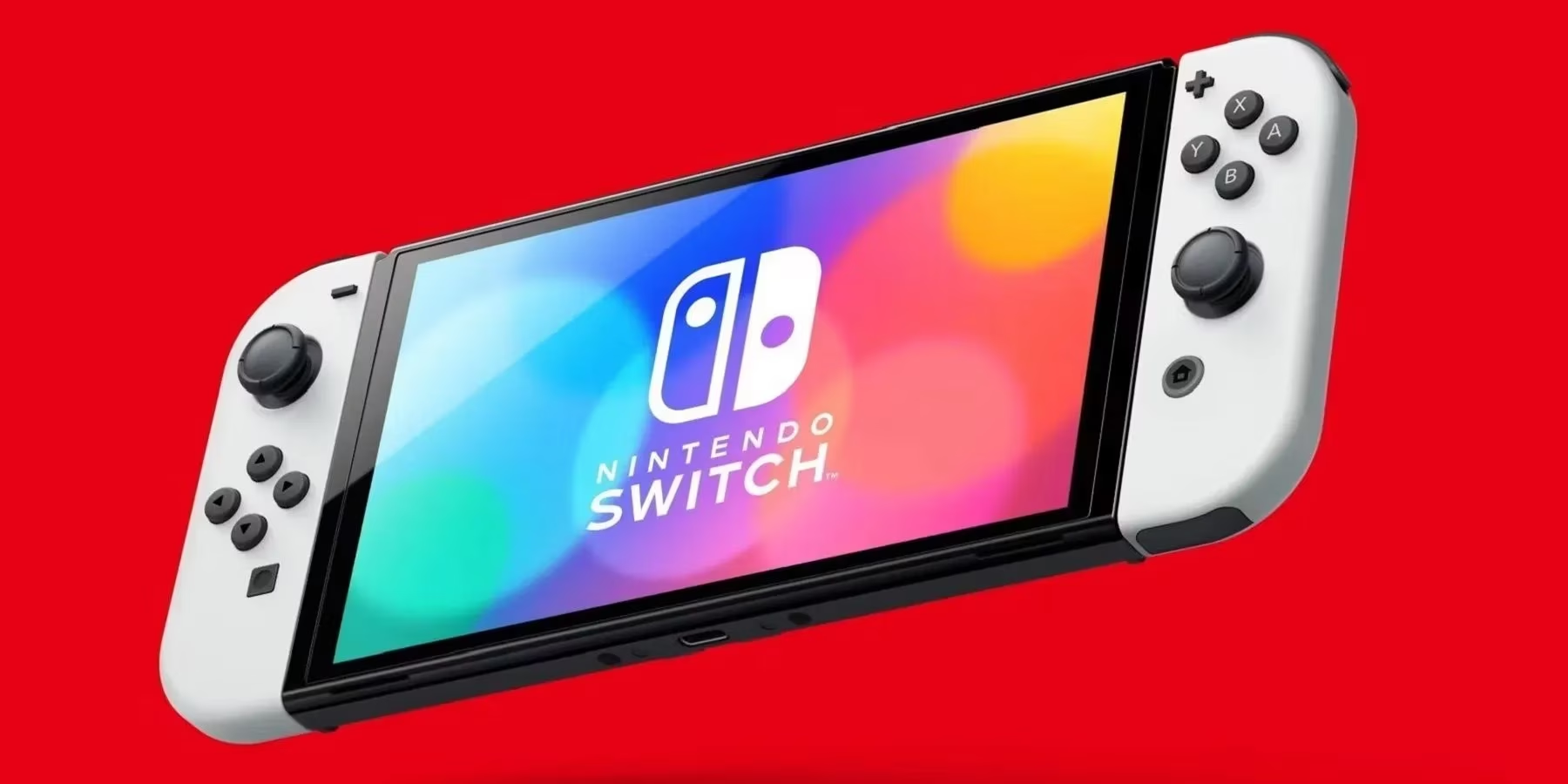
Nintendo’s internal sales numbers, released just a few weeks ago, paint a vivid picture of the platform’s health even as we await its successor. The top 10 best-selling Switch games now represent a cumulative total that exceeds 350 million units worldwide. That’s staggering, and it means almost every Switch owner has bought several of these titles, either physical or digital. The list isn’t radically different from what we saw a few years ago, but the specifics have shifted in ways that reflect both the power of long-tail sales and the appetites of the modern Nintendo audience.
The new ranking looks like this:
| Rank | Game | Approximate Sales (millions) |
|---|---|---|
| 1 | Mario Kart 8 Deluxe | 62.3 |
| 2 | Animal Crossing: New Horizons | 48.1 |
| 3 | Super Smash Bros. Ultimate | 36.7 |
| 4 | The Legend of Zelda: Breath of the Wild | 34.8 |
| 5 | Pokémon Scarlet and Violet | 31.4 |
| 6 | Super Mario Odyssey | 28.5 |
| 7 | Pokémon Sword and Shield | 27.2 |
| 8 | The Legend of Zelda: Tears of the Kingdom | 26.9 |
| 9 | Super Mario Party | 23.0 |
| 10 | Super Mario Bros. Wonder | 22.8 |
What jumped out at me immediately was the persistence of Mario Kart 8 Deluxe. At over 62 million copies, it’s now the best-selling racing game of all time by an absurd margin, and it continues to move millions of units every holiday season. The game’s inclusion in bundles and its evergreen appeal make it almost unstoppable, and I suspect it will keep finding new players well into the next console generation, especially if a hypothetical upgrade path is offered.
Animal Crossing: New Horizons sits comfortably in second place, and while its pace has slowed considerably since the pandemic boom, it still accumulates sales at a steady clip. I’m always amazed at how many themed Switch Lites I see in the wild with pastel colors and leaf patterns, proof that the island life still resonates.
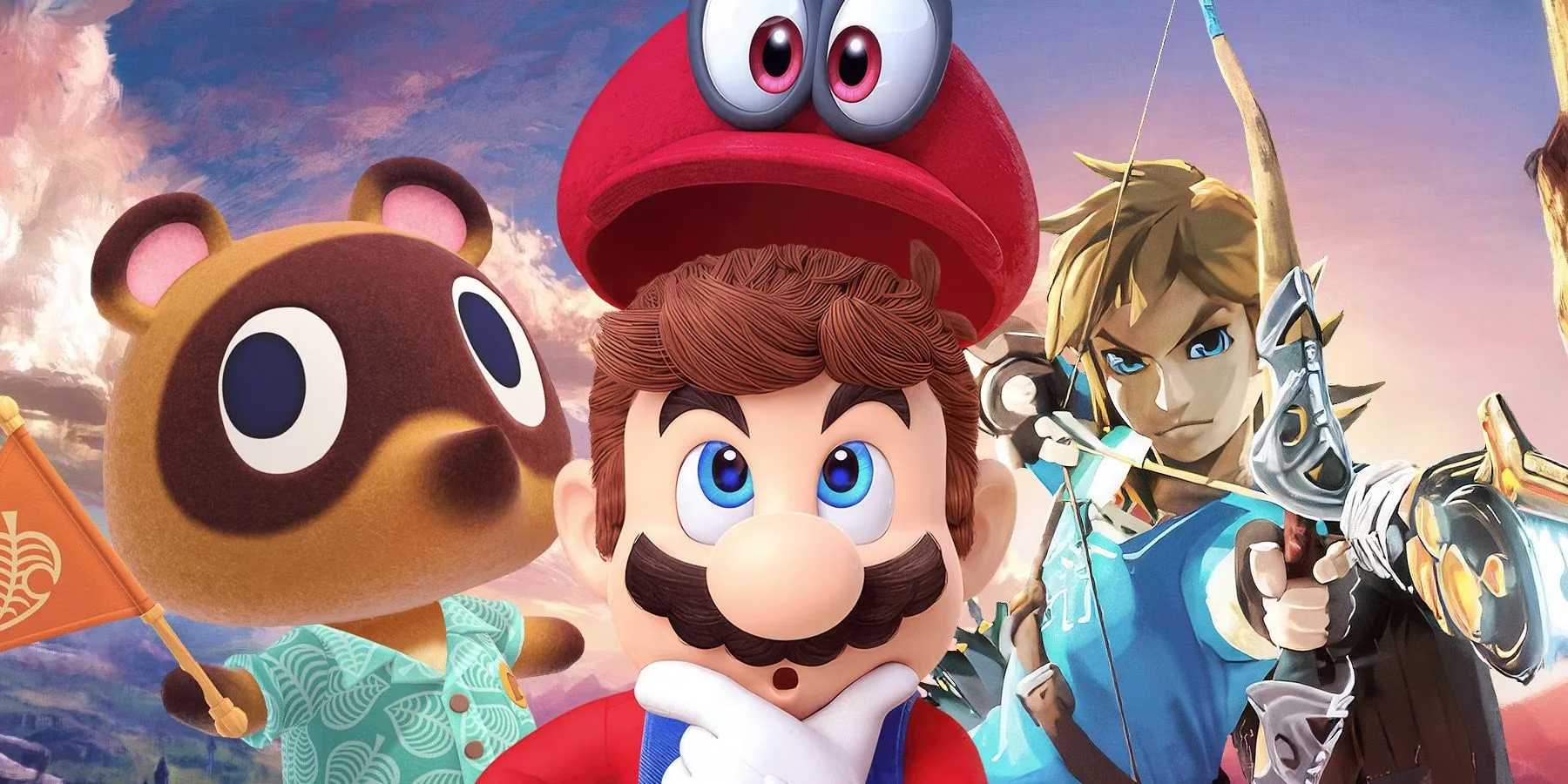
Perhaps the most interesting movement has occurred in the fifth and seventh positions. Pokémon Scarlet and Violet surged past 31 million, finally overtaking Sword and Shield which now sits just below 27.3 million. The Paldea adventure was controversial at launch due to performance issues, but the word-of-mouth around its open world and the strong DLC have kept it relevant for three full years, while Sword and Shield’s momentum has naturally waned. I personally didn’t mind the glitches because the sense of exploration pulled me in for hundreds of hours, and clearly millions of trainers agreed.
Just beneath them, The Legend of Zelda: Tears of the Kingdom now clings to the eighth spot with nearly 27 million copies, nearly catching Breath of the Wild if you combine the latter’s Wii U sales (which Nintendo doesn’t include in the Switch-only tally). Tears of the Kingdom added a million sales each quarter for the past two years, and I have no doubt it will eventually surpass Breath of the Wild’s Switch lifetime total. The sheer amount of player-made flying machines and Korok torture clips I still see on social media confirms that the game’s world isn’t going to be forgotten anytime soon.
The most notable newcomer is Super Mario Bros. Wonder, which blasted onto the chart in the tenth position, pushing New Super Mario Bros. U Deluxe completely off the ranking. I’ve been a fan of 2D Mario for decades, and Wonder felt like a true reinvention with its lively animations and unpredictable Wonder Effects. It has already become the best-selling pure 2D Mario game ever, and with holiday bundles continuing to include it, I can see it climbing past Super Mario Party next year.
Speaking of Super Mario Party, it stubbornly holds onto ninth place, a testament to the enduring appeal of local multiplayer. Families grab it for weekends, and the updated motion-control minigames still produce hilarious chaos. I own it and still bring it out when friends visit, which keeps its legs much stronger than I’d ever have predicted.
Glancing at this list in 2026, I notice something almost poignant: every single title is a first-party Nintendo game, reinforcing just how fundamentally the company’s own software drives its hardware. There are no third-party surprises, no Minecraft or Monster Hunter Rise breaking into the top echelon (though those have sold spectacularly in their own right). That’s not a weakness—it’s a reflection of Nintendo’s unmatched ability to create experiences that define a platform. As I look forward to what comes after the Switch, I’m already curious which of these juggernauts will reappear on a new system’s top 10 chart, and whether Mario Kart 8 Deluxe will finally, mercifully, be retired. Probably not.