How Tears of the Kingdom’s Hover Bike Outshone Nintendo’s Own Motorcycle Legacy
In the grand history of Hyrule’s transportation, few vehicles have ever sparked as much joy—and as much head-scratching—as the Master Cycle Zero. That sleek, Sheikah-tech motorcycle from Breath of the Wild’s DLC felt like a fever dream Link had after eating one too many dubious meals. But by 2026, it’s a distant memory, replaced not by a shiny official successor, but by a rickety contraption called the Hover Bike. Who would have guessed that three Zonai parts and a dream would become the emblem of Tears of the Kingdom’s innovation?
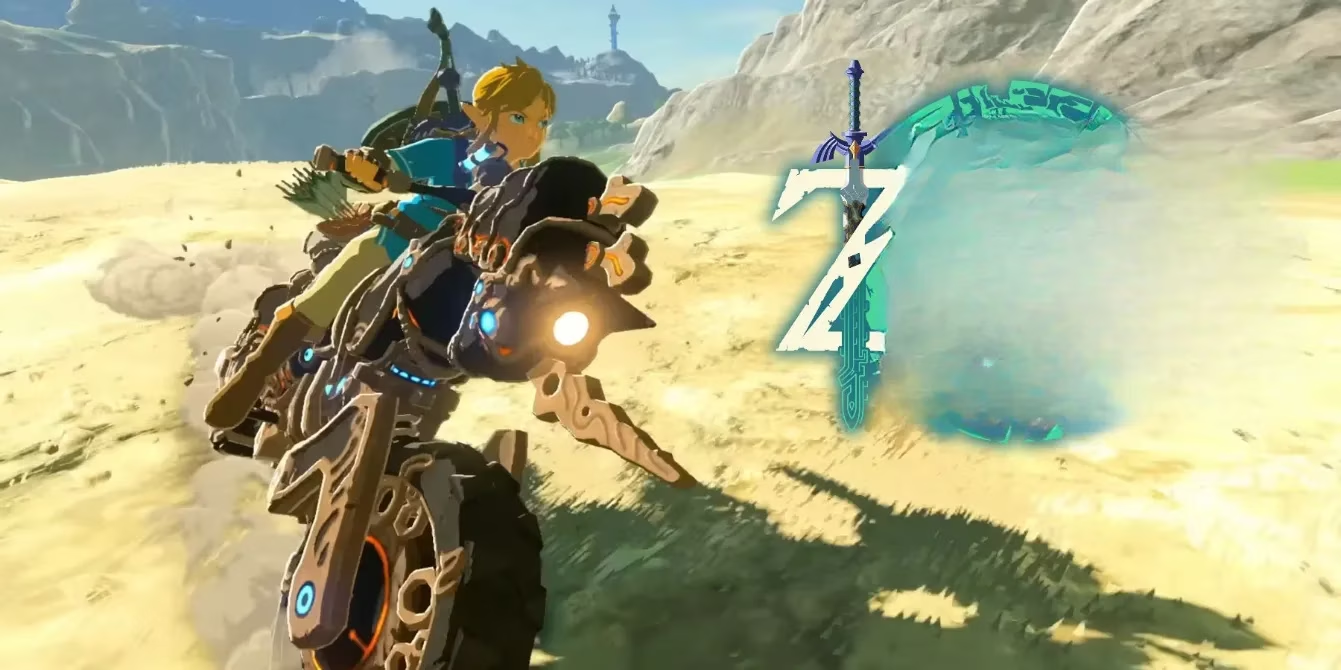
When the Master Cycle Zero first rumbled into Hyrule, it was as if the developers at Nintendo had decided to toss all medieval fantasy pretense into a chasm. After all, what business did a motorcycle have in a kingdom of swords and sorcery? The late Eiji Aonuma and Hidemaro Fujibayashi later revealed that the idea had been floating around since the early days of Breath of the Wild—a testament to their rebellious design spirit. And yet, the Master Cycle Zero never quite got the victory lap it deserved. By the time most players earned it through The Champions’ Ballad, they had already conquered every shrine, toppled Ganon several times over, and were left wondering what to do with a bike that couldn’t even help them find the last few Korok seeds. It was the ultimate case of “arriving too late to the party.”
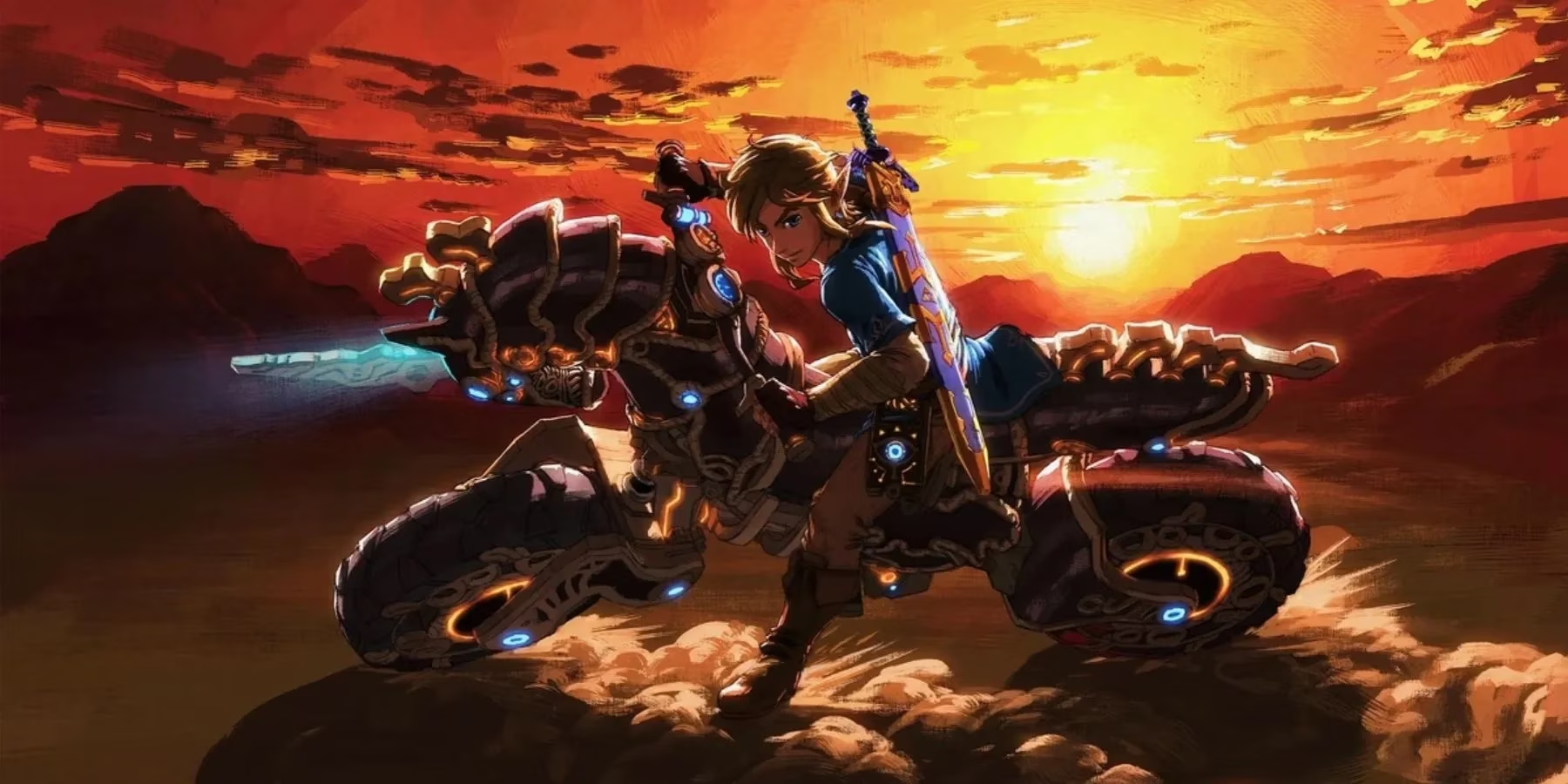
Then came Tears of the Kingdom. Hope flickered that the Master Cycle Zero might return, but Nintendo swept most Sheikah tech under the carpet—literally, maybe buried by the Upheaval. Instead, players got Zonai devices, a gloriously chaotic toy box of fans, steering sticks, and wheels. And in that box lay the blueprint for something far more revolutionary than any DLC bike. Enter the Hover Bike: two fans and a steering stick fused together with the kind of reckless optimism that defines every Link who has ever tried to paraglide off a Sky Island without enough stamina. Why ride on bumpy terrain when you can float above it, laughing at physics?
Nintendo did attempt to pay homage. The Beam Cycle, found in the Shrine of Resurrection, looked like a nod to the Master Cycle Zero. But let’s be honest—it has all the grace of a Lizalfos trying to dance. Its design is clunky, its maneuverability is questionable, and it guzzles battery like a hungry Hinox. Why use that when a machine crafted from three common parts offers near-silent flight, exceptional energy efficiency, and the ability to ascend faster than a Rito on caffeine? The Hover Bike doesn’t just honor the spirit of the Master Cycle Zero; it surpasses it by granting true all-terrain freedom without demanding a DLC completionist’s blood, sweat, and tears.
It’s worth asking: what makes the Hover Bike so beloved in 2026, three years after Tears of the Kingdom’s release? The answer lies in its sheer accessibility and the emergent creativity it represents. While schematics for elaborate war machines lie forgotten in players’ inventories, the minimalist Hover Bike remains the go-to ride for veterans and newcomers alike. Builders have even refined it with additional parts—like a Dragon Scale for extra distance or a Brightbloom Seed for mood lighting—but the core three-part design remains untouchable. Compare that to the Master Cycle Zero, which required you to refuel with random materials; the Hover Bike runs on a few Zonai Charges and pure ingenuity.
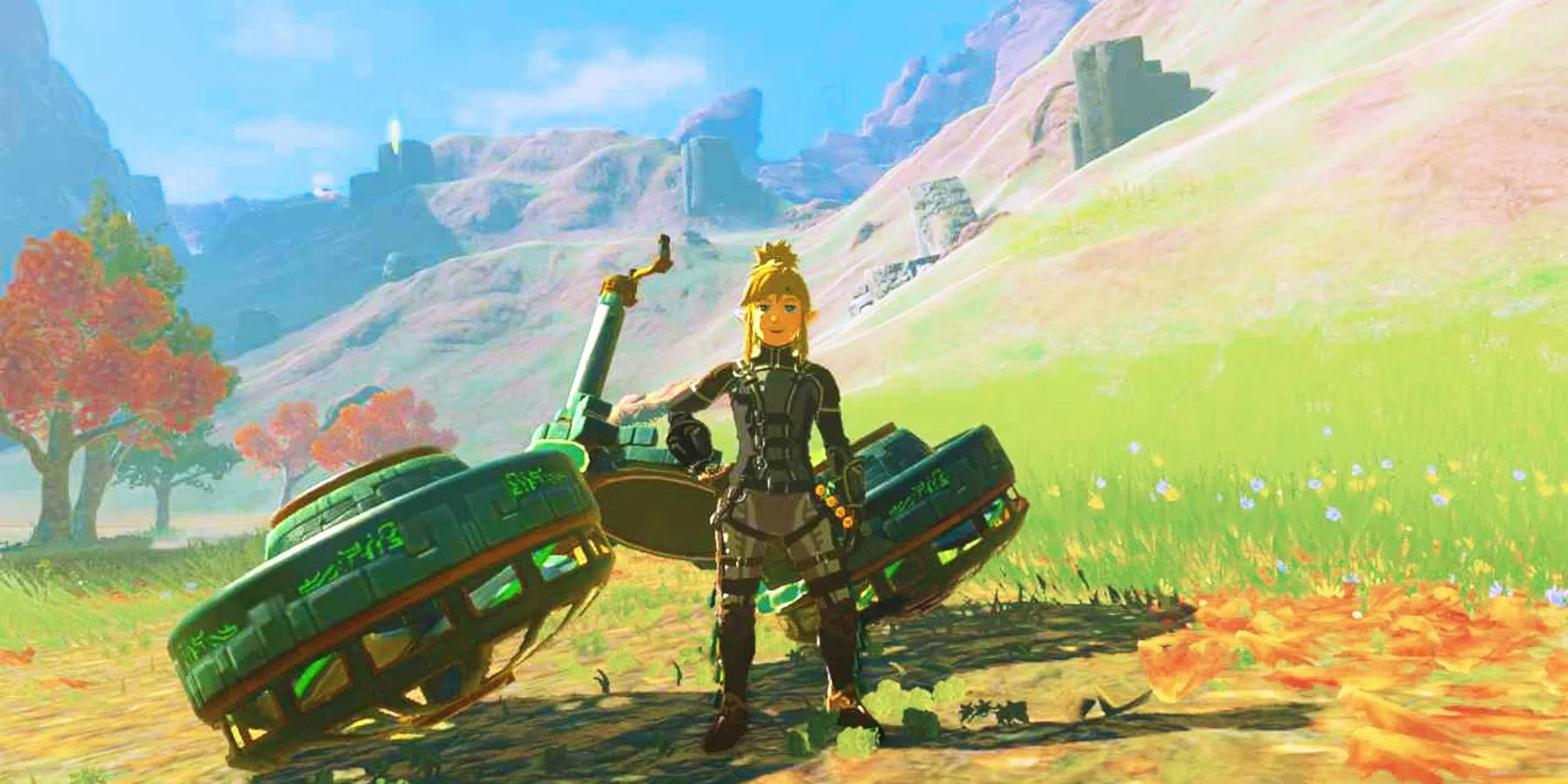
Of course, the Hover Bike isn’t perfect. It can spin out of control if you sneeze on the control stick, and forgetting to turn it off before dismounting often results in watching your prized vehicle drift into a bottomless pit. But these quirks only add to its charm, much like the Master Cycle Zero’s tendency to spawn sideways on a cliff edge. The difference is that the Hover Bike became an integral part of the base game experience from the moment players discovered it, evolving alongside their journey rather than waiting at the finish line. The community didn’t just find a replacement for a motorcycle; they built a symbol of a new era where player-driven innovation steals the spotlight from developer-intended rewards.
So as Hyrule continues to buzz with the hum of tiny fans in 2026, one thing is clear: Nintendo gave us wings, but the players taught themselves to fly. And while we may never see the Master Cycle Zero again, its legacy lives on in every lopsided, gloriously effective Hover Bike that careens across the sky. Who needs a divine beast when you have two fans and a dream?