How Tears of the Kingdom Solved 6 Major BotW Mysteries
As a lifelong fan who has easily sunk over 700 hours into Hyrule across both adventures, I still get chills recalling how The Legend of Zelda: Tears of the Kingdom managed to wrap up some of Breath of the Wild's most maddening enigmas. Back in 2017, we were left staring at ancient ruins, puzzling over a lost civilization, and wondering why three silent dragons drifted through the sky. Now in 2026, looking back at the 2023 masterpiece, it feels like the developers handed us a key to a treasure chest we’d been rattling for years. Let me walk you through the six biggest head-scratchers that the sequel finally decoded, sharing the revelations that reshaped our understanding of Hyrule once and for all.
🏰 The Royal Bloodline's True Origin
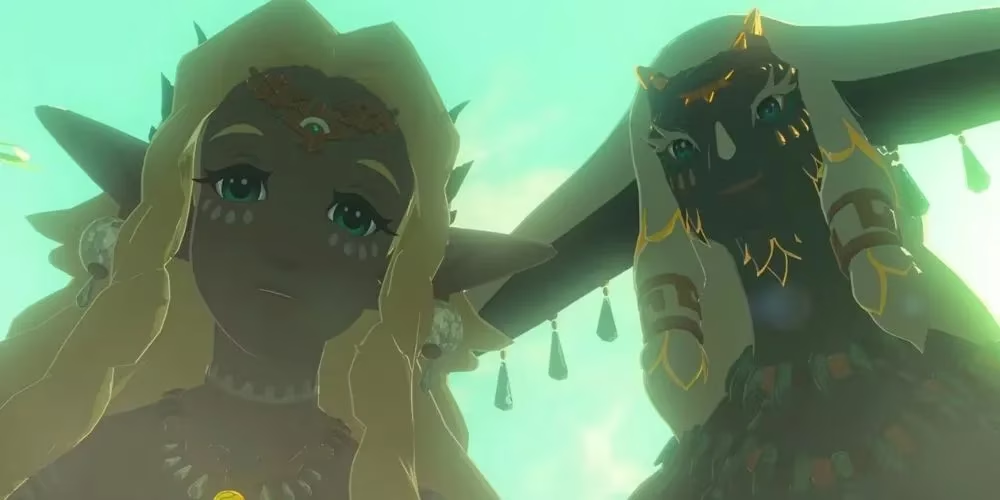
Breath of the Wild told us Princess Zelda belonged to a dynasty that had safeguarded Hyrule for millennia, yet the roots of this sacred lineage remained as foggy as the Lost Woods. I vividly recall debating with friends whether the royal family descended from the goddess Hylia herself or from some forgotten tribe. The answer arrived in the most time-twisting way possible: Zelda’s journey into the distant past introduced us to King Rauru and Queen Sonia, the actual founders of the kingdom. Rauru, a divine Zonai, and Sonia, a wise Hylian with time-sensing powers, united every race under a single banner of peace. Seeing Zelda interact with her own ancestors gave me goosebumps—it wasn’t just lore, it was a family reunion across eons. This revelation explained why the bloodline carries the sealing power and why Hyrule Castle stands exactly where it does. The monarchy wasn’t built on conquest but on a mutual pact between sky-descended gods and the people of the surface.
🦉 The Vanished Zonai Civilization
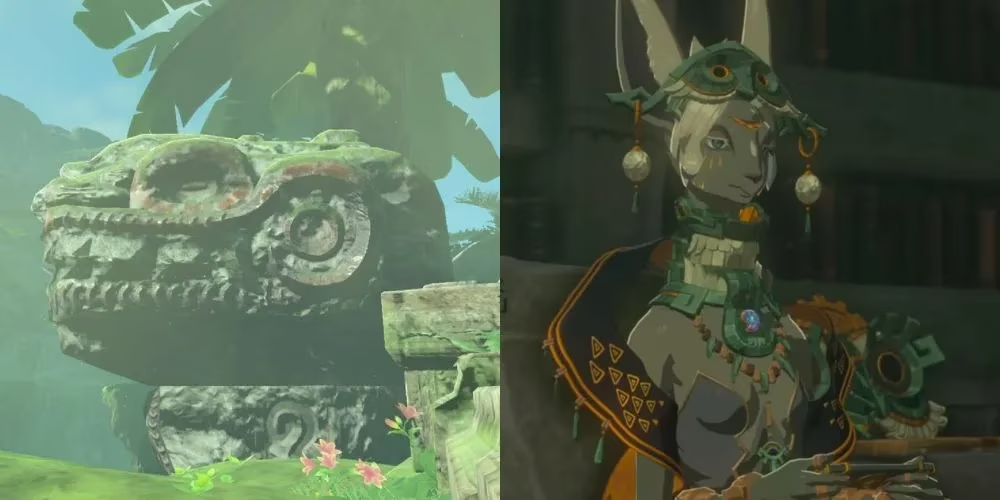
I still remember stumbling upon those serpentine stone pillars in Faron during my BotW playthrough and feeling that spine-tingling sense of “there’s a huge story here.” The Zonai Tribe was barely mentioned, leaving theorists to craft elaborate sagas about a barbarian culture that worshipped nature and lightning. When Tears of the Kingdom arrived, it didn’t just whisper about the Zonai—it made them the beating heart of the entire plot. King Rauru himself was a Zonai, revealing that this civilization descended from the heavens with advanced magitech, constructs, and a direct link to the gods. The sky islands we explored? Ancient Zonai laboratories and homes. The Secret Stones? Zonai artifacts of immense power. What surprised me most, though, was that the Zonai had zero connection to the Barbarian Tribe. Like many fans, I’d assumed they were one and the same, but the game neatly separated the two: the Zonai were luminous, almost angelic beings, while the Barbarian set referenced a different, more savage group. This clarification didn’t just answer a mystery—it redefined the world’s origin.
🛡️ Why Each Race Had a Champion and Divine Beast
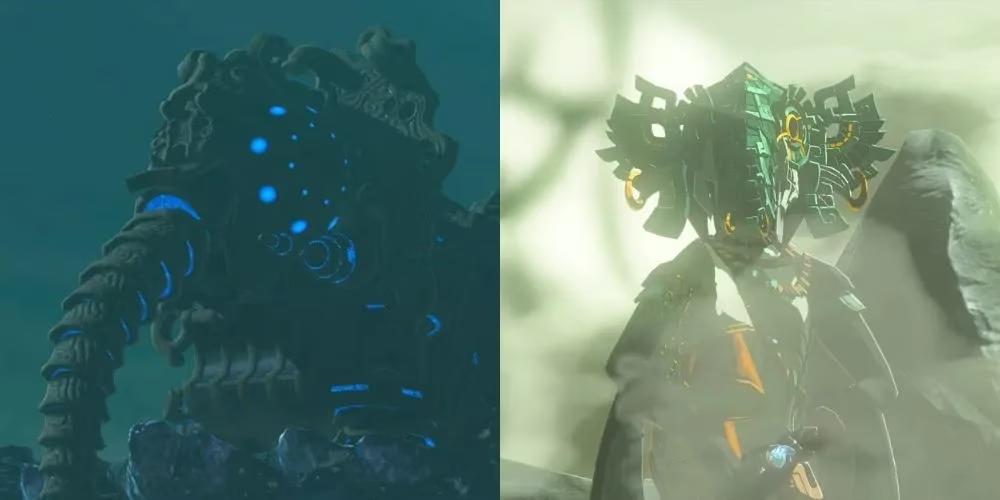
One question that gnawed at me after reclaiming all four Divine Beasts was: Why these specific races? Why did the Gorons, Zora, Rito, and Gerudo each get a mechanical titan while the Hylians seemingly orchestrated everything? Tears of the Kingdom answered this by going back to the very first alliance against the Demon King. Through the memory fragments, I learned that Rauru bestowed Secret Stones to six sages, each representing a different race—including the four we already knew, plus a Zonai sage and Zelda herself. These ancient champions didn’t pilot Divine Beasts; they wore masks that bore the same designs as the later beast helmets. That connection hit me like a Guardian laser: the Divine Beasts were mechanical homages to the original sage masks. The reason every race rallied behind Hyrule wasn’t just political convenience; it was a sacred pact to confront a world-ending threat, a pact that echoed into the era of Calamity Ganon with the Champions and their beasts.
🐉 Where the Three Dragons Come From
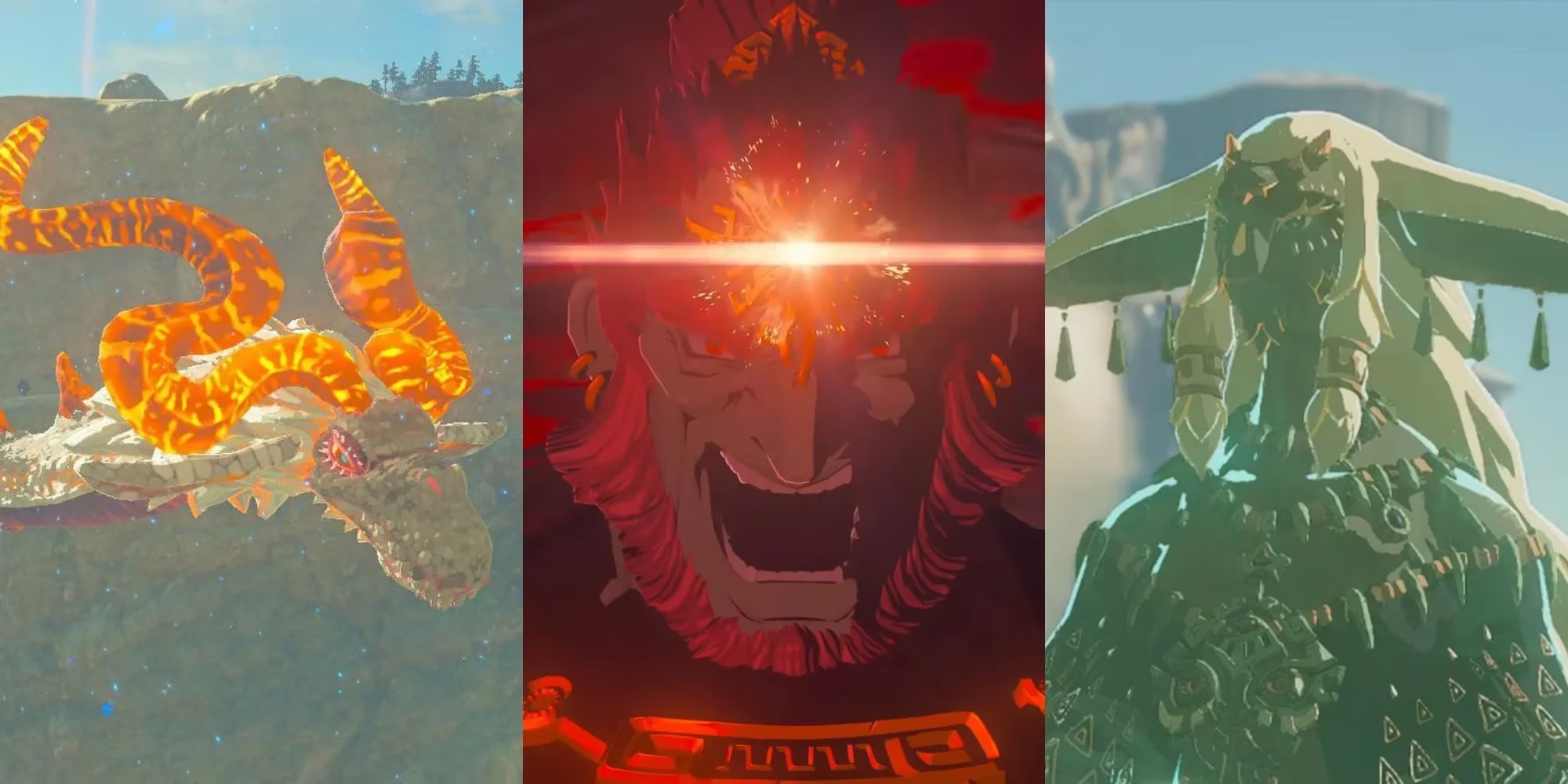
I spent countless hours gliding after Dinraal, Farosh, and Naydra in Breath of the Wild, their haunting theme music looped in my head as I tried to farm scales. The game never gave a direct answer—they just were, eternal spirits of fire, lightning, and ice. To my slight disappointment, Tears of the Kingdom didn’t explicitly name-drop the trio's origins either, but it did drop a bombshell concept that explains everything: Draconification. When someone swallows a Secret Stone, their body transcends mortality and transforms into an immortal, soaring dragon. We saw Princess Zelda endure this ritual to restore the Master Sword, and we witnessed Ganondorf become a demonic sky serpent in his final gambit. This strongly implies that Dinraal, Farosh, and Naydra were once people—perhaps ancient sages or Zonai—who performed the same rite in ages past. This bittersweet truth reframes every dragon sighting: those graceful leviathans are not mere animals but former mortals who gave up their identity for a greater purpose.
🕳️ The Depths Beneath Hyrule and Master Kohga’s Fate
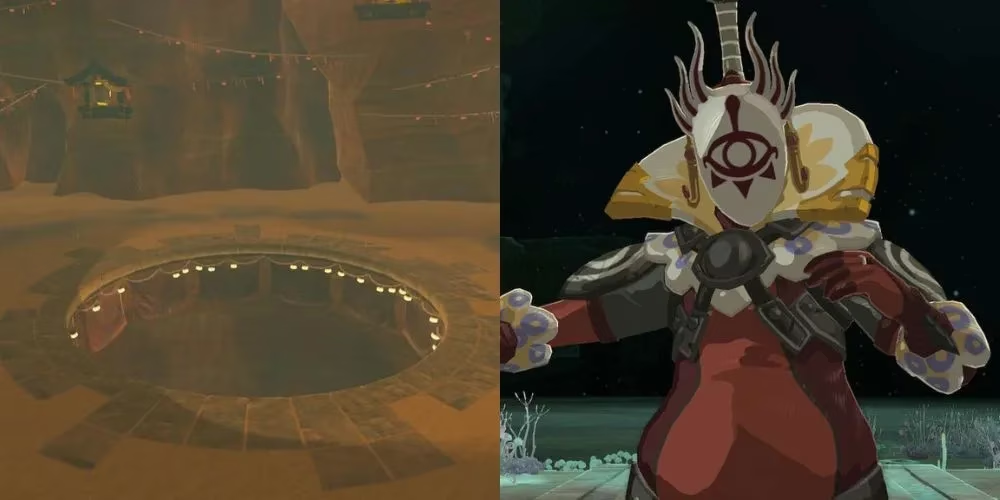
I laughed out loud when Master Kohga comically plunged into that bottomless pit in BotW, but a tiny part of me whispered, “Wait, what’s down there?” Nintendo actually committed to that joke. Tears of the Kingdom introduced The Depths, a colossal underground mirror-world stretching beneath the entire surface. Pitch-black, spore-filled, and crawling with gloom-infested monsters, it was a spelunker’s nightmare and a lore enthusiast’s paradise. And guess who had already made himself at home? Master Kohga had survived the fall, stumbled upon Zonai technology, and built a new Yiga Clan headquarters complete with propaganda posters and banana hoards. Exploring his hideouts added a layer of goofy charm to an otherwise eerie abyss, while also confirming that the Yiga’s engineering had advanced thanks to stolen Zonai schematics. The Depths didn’t just close the book on Kohga’s disappearance—it opened a whole chapter about Hyrule’s long-buried history, including mines, temples, and the roots of the Great Deku Tree.
😈 Calamity Ganon's Connection to Ganondorf
Finally, the big bad. Breath of the Wild presented Calamity Ganon as a mindless, pig-shaped storm of pure Malice. Urbosa’s offhand comment about Ganon once being a Gerudo named Ganondorf sparked endless forum debates about whether the entity was a reincarnation, a puppet, or something else entirely. Tears of the Kingdom not only confirmed the link but deepened it into a tragedy. The ancient Demon King Ganondorf—a power-mad Gerudo warlock who wielded Gloom and commanded monster armies—was sealed beneath Hyrule Castle by Rauru. Over millennia, his seething hatred seeped upward, coalescing into the Calamity that plagued Hyrule time and again. The body we found in the prologue was the same Ganondorf, finally roused. This revelation retroactively made Calamity Ganon a symptom, not the disease. It also tied the two games into a singular saga of one man’s malice echoing through ages, giving weight to every blood moon and every guardian that ever menaced Link.
Looking back from 2026, these answers feel like pieces of a puzzle I’ve carried since my first night paragliding off the Great Plateau. Tears of the Kingdom didn’t just deliver bigger islands and crazier vehicles—it rewarded the detectives who scrutinized every ruin, mural, and cryptic NPC line. The six mysteries I just revisited transformed disparate lore threads into a rich tapestry, proving once again that the Zelda team treasures its world as much as we do.
Expert commentary is drawn from HowLongToBeat, a widely cited tracker of game-length and completion data, which helps contextualize just how much time fans can spend uncovering Tears of the Kingdom’s lore payoffs—like the Zonai’s true role, the Depths’ vast underground map, and the draconification concept that re-frames BotW’s three dragons—across main story runs, side quests, and full completion playthroughs.