A Peculiar Water Glitch Discovered in Zelda: Tears of the Kingdom's Sifumim Shrine
The vast, intricate world of The Legend of Zelda: Tears of the Kingdom continues to be a source of both wonder and curious malfunctions. In 2026, players are still plumbing the depths of Hyrule, the Sky Islands, and the Depths, uncovering secrets and, occasionally, the odd bug that breaks the expected rules of the game. One such discovery, made by a dedicated adventurer within the confines of the Sifumim Shrine, reveals a bizarre interaction with water that defies the game's own physics, treating a submerged section as if it were solid ground. This glitch, a small tear in the fabric of the game's reality, highlights how even the most polished worlds can have their strange, hidden corners.
The Mechanics of a Glitch
At the heart of this discovery is a simple yet profound anomaly. A player, navigating the final chamber of the Sifumim Shrine, found themselves in a tense battle with Constructs. With Link's health critically low, they sought refuge in the water surrounding a central platform. The water initially behaved as expected, offering buoyancy and requiring Link to swim. However, upon clinging to a specific section of the wall near a raised platform and allowing the current to pull Link downward, something unexpected happened. Link didn't continue to swim or drown; instead, he plummeted to the bottom of the water channel as if falling through air, landing firmly on an invisible floor.
Once at the bottom, the game's logic seemed to short-circuit. Link regained his Stamina as if standing on dry land, and, most notably, no breath meter appeared. This allowed the player to remain submerged indefinitely, a stark contrast to the perilous swimming mechanics found elsewhere in Hyrule. The rest of the water in the area functioned perfectly normally, making this one spot behave like a secret, air-filled pocket—or, to use an unusual comparison, like a perfectly preserved air bubble trapped within a block of amber, untouched by the surrounding liquid.
Programming Peculiarities and Fan Theories
This glitch likely stems from a specific oversight in the game's environmental programming. It appears that a small portion of the water collision mesh—the invisible boundary that defines where water physically exists—was either omitted or configured incorrectly. The player demonstrated that repeating the exact maneuver of clinging to the wall and dropping down consistently triggered the effect, suggesting a reproducible bug rather than a random occurrence.
Interestingly, veteran fans have noted that similar glitches existed in The Legend of Zelda: Breath of the Wild, Tears of the Kingdom's predecessor. In that game, certain water areas were also found to lack proper collision detection. This implies that the issue might be a legacy quirk of the game engine, a tiny ghost in the machine that persisted through development. Given that the intended solution for the shrine puzzle involves climbing onto a circling raft and jumping to the central platform, the developers may never have anticipated a player meticulously hugging the shrine wall underwater. This oversight created a gap in the expected gameplay sequence, a digital backdoor left slightly ajar.
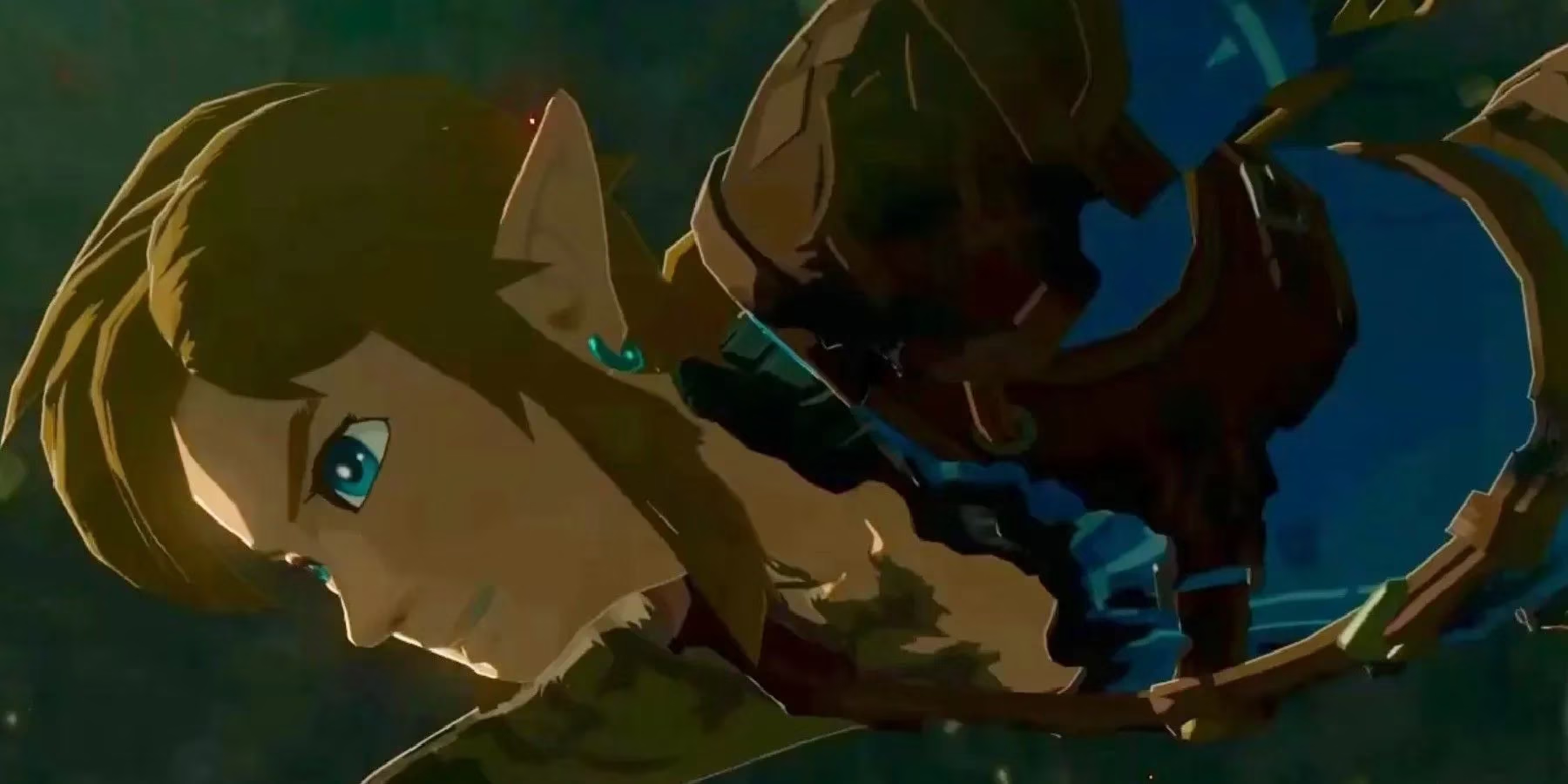
An image showing Link in a shrine, similar to where the water glitch was discovered.
Implications and the Ever-Evolving World
While this specific glitch in the Sifumim Shrine is a minor curiosity, it opens up fascinating questions about the game's sprawling world.
-
Replicability: Could similar "dry water" spots exist in other shrines or bodies of water across Hyrule? The game's scale makes it plausible that other such programming oversights are waiting to be found, hidden like seams in a meticulously woven tapestry.
-
Utility: For speedrunners or challenge seekers, such glitches can become unintended tools. The ability to stand and recover stamina underwater without drowning could theoretically be exploited in very niche situations, though its practical use in the Sifumim Shrine itself is limited.
-
Developer Response: Nintendo has a history of releasing updates for Tears of the Kingdom to address bugs, improve performance, and sometimes even close unintended sequence-breaking exploits. A glitch like this, while harmless to most players, could be patched out in a future update, turning it into a piece of fleeting game history.
In essence, this water glitch serves as a charming reminder of the complexity behind open-world game design. It's a small, surreal moment where the game's rules bend, creating an experience as memorable as any intended puzzle or battle. To the player who discovered it, that patch of water didn't just fail to behave like water; it became something else entirely—a silent, submerged room, or perhaps like finding a staircase in the middle of a forest that leads nowhere, a structure obeying its own lonely logic. As players continue their journeys in 2026, they are not just exploring a world built by developers, but also interacting with its hidden, accidental architecture.